After releasing a new documentary about his life and pursuits earlier this year, Jack Johnson’s U.S. tour stops Sunday at Acrisure Amphitheater. The Local Spins interview by Bill Forman.
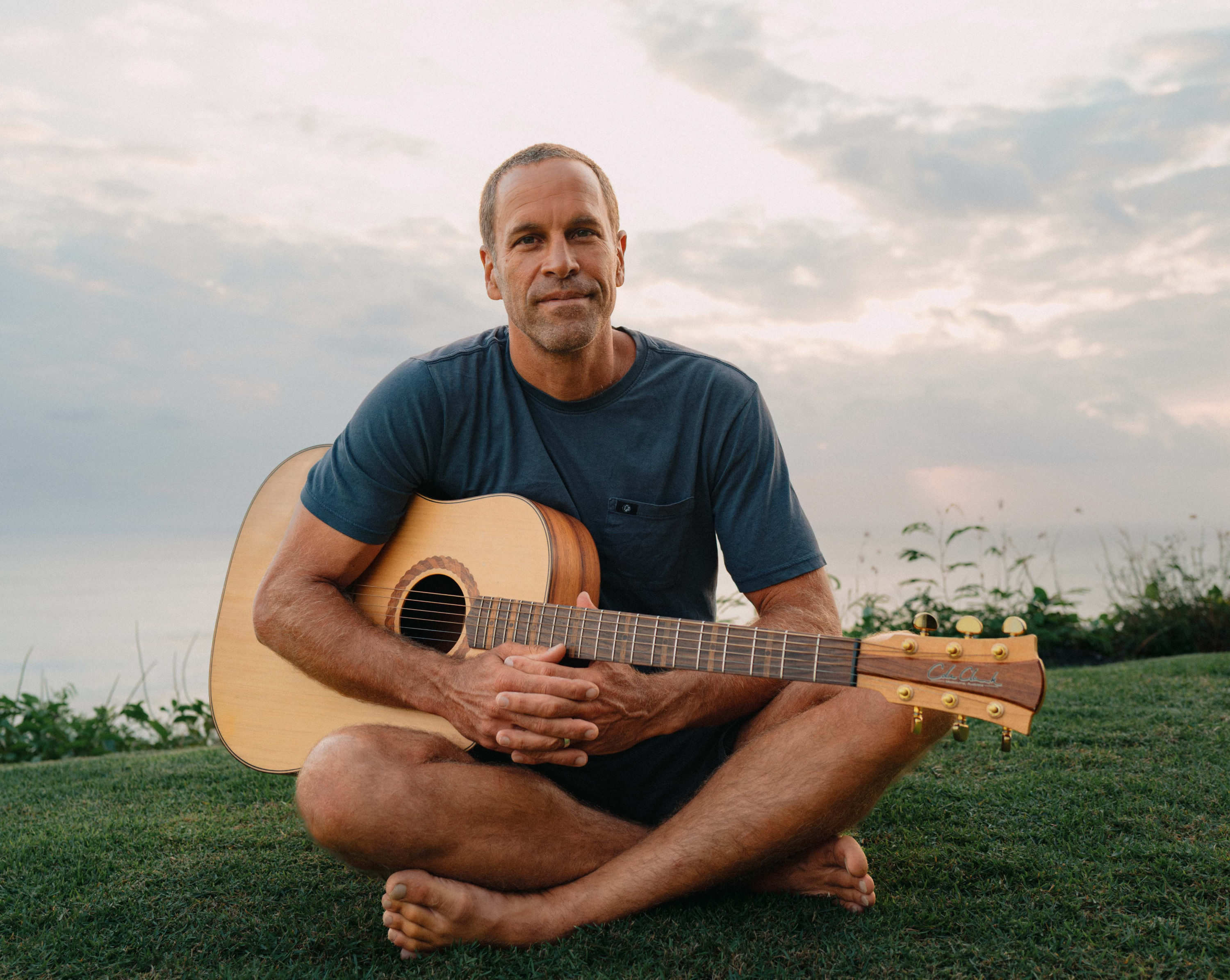
: Jack Johnson has fashioned a career around his passions. (Photo/Tahnei Roy)
SCROLL DOWN FOR VIDEO, FILM TRAILER
Support our coverage of
West Michigan's music scene
Long before he was playing stadiums, Jack Johnson would sit in a living room crowded with acoustic instruments, playing songs for his mother, his girlfriend and, occasionally, his father.
Johnson recalls how his dad – a grounded presence not prone to quick compliments – would walk in on the band while they were listening back to a track they were working on and tell them they were wasting their time.
“It sounds the same as it did this morning,” Johnson said his father would joke. “Why don’t you just record it once and go surfing?”
In the years since, the Hawaii native has learned how to juggle both of those activities, and a whole lot more, as reflected in “SurFilMusic,” his documentary about his three life-long pursuits — surfing (at 17, he was the youngest professional to compete in the Pipeline Masters), filmmaking and music. Released in May, it has played in nine countries.
The cinematic release arrives alongside a sprawling companion double-album that functions as a bridge between Johnson’s past and present. The first half features an original instrumental score co-written with the Swiss-Ecuadorian guitar duo Hermanos Gutiérrez, whose “spaghetti Western surf music” provides an atmospheric backdrop. The second half strips away the production entirely, gathering remastered, previously unreleased recordings pulled straight from Johnson’s earliest four-track cassette tapes.
To support the dual release, Johnson has launched a 43-date North American tour that runs through October, with a stop Sunday (July 5) at Grand Rapids’ Acrisure Amphitheater, with Gutierrez opening. Tickets – $133.40-$182.40 – available online here.
($2 of the ticket price is donated by Jack Johnson to support the environment with $1 to REVERB’s Climate Project Portfolio to support carbon reduction projects and $1 to the Johnson Ohana Foundation to support the All At Once Non-Profit Partners working on environmental initiatives near each concert and across the country.)
The road remains a family affair, run by his wife – who has continued to be his manager to this day — alongside childhood friends who fill nearly every production role. Rather than hiring nannies for the road, the tour travels with grandparents and old friends.
For Johnson, the live performance is less about the spotlight and more about playing shows where things can go wrong. The real fun, he said in a late-June interview, only begins when he hits a wrong chord or forgets a verse, stripping away the performance and leaving something purely human.
Q: When you were making “SurFilMusic,” why did you decide to focus so heavily on that human element rather than the performance side?
Johnson: We actually started out to finally release our old surf movies from the 90s, “Thicker than Water” and “September Sessions.” The idea was just putting together five-minute pieces about trips to Tahiti or the Pipeline Masters. Pretty soon, we started putting them next to each other and it felt like a half-hour film, then 45 minutes, and next thing we knew, it turned into a feature-length documentary.
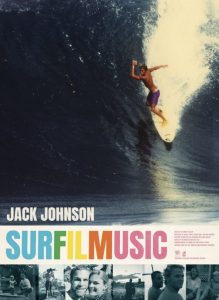
The Documentary: ‘Surfilmusic’
The theme of friendship just kept coming up. I wouldn’t have been able to make that first surf film without Chris and Emmett Malloy. Then, during the process, we lost one of my best friends, Tamayo Perry. The last time we hung out, I was showing him a bunch of the old footage and we were having all these memories of being on a boat together in our mid-20s. He was the quintessential friend to everybody in the film. Losing him gave us more reason to dig through all this footage, and that’s how the film happened. As far as the human versus performer aspect, I’ve never really felt like a performer. I’ve always enjoyed writing songs and playing them for people, but usually, once I hit that first wrong chord or forget a verse, everything loosens up and feels like fun.
Q: How did the geographical isolation and cultural landscape of the North Shore of Oahu shape your songwriting identity?
Johnson: The environment anybody grows up in is bound to shape your sound. Where I grew up, waves hit the shore every 12 seconds or so for an average swell. You hear this really slow rhythm all the time, even at night when you’re sleeping. I think that slow rhythm probably helped set a pretty slow pace for the BPMs in my music. Additionally, the traditional Hawaiian music I grew up on informed how I play quite a bit. Learning from uncles who were around playing the slack-key style of guitar, which uses a lot of open tunings, really shaped my style.
Q: It’s pretty clear you knew you would be surfing and making music as long as you possibly could, even before you knew you could do it for a living.
Johnson: Yeah, definitely. Filmmaking was a tool where I could do something creative that I could possibly make a living doing, like shooting a commercial or a music video, which I did for a few years after college. But music and surfing are things we’re always doing as a family. Our living room is just full of instruments and we’re always playing music when friends are over. It doesn’t matter if I have a tour coming up or not, we’re always jamming. The same thing with surfing; I try to do it every day. Even if there’s no waves, I’ll go jump in the water. Music is something I do in my life no matter what. It was just a wild turn when it went down the path of getting to do it for a living.
Q: You connected with Ben Harper early on. (Johnson opened for Harper at Calvin College Fine Arts Center in Grand Rapids in 2001.) Can you trace that lineage back to early acoustic blues?
Johnson: I love thinking about being part of a tradition. Ben really took me under his wing like an older brother in the music world. The first tour I ever did was opening for him. Just seeing how much his band cared about the people coming to their shows — how he would take so much time to talk to people after the gigs, and how the band would get together and give thanks that they were even getting to play live music — that was the blueprint of touring for me. I felt really lucky to learn how to tour that way.
Q: There’s a point in the documentary where Harper is talking about you and he says “It takes a great deal of intensity to sound simple and pure.” Have there been times when you had to pull yourself back from the pressure of record companies and stadiums to stay true to yourself?
Johnson: I’ve been really lucky because my wife has been my manager since this whole thing started, and we’ve been together since we were 18 years old. She and one of my best friends manage everything. We’ve been able to keep a pretty good handle on it because I’ve always been surrounded by people who loved me before any of this happened. You don’t get surrounded by yes people, and you can get a real sense of whether you want to go down certain paths. If we ever feel a little bit over our heads, we are able to finish a tour and say, “OK, let’s never book that many shows in a row again.” The trick for us has been keeping friends in every position. On tour, we’ve always brought our family along ever since the kids were babies, bringing grandparents and friends instead of nannies. Backstage is a little bit of a traveling circus, but keeping that normalcy makes it doable and fun. Taking a lot of years off between tours helps, too. Regarding the intensity — it’s sweet what Ben says in that part of the film, but you don’t always see those things in yourself. Sometimes your friends know you better than you do.
Q: How did the non-profit side of things become such a big part of what you do on tour?
Johnson: That really goes back to my wife. She was a teacher, and I stole her away from teaching when this all started growing. After a couple of years, she saw the chance to get back into education by starting a non-profit and tying pretty much everything we do with touring to non-profits worldwide. Every show we play, we have local non-profits out there that benefit from the event. We see the concerts as a gathering place where fans — especially young people — can connect with local groups, become members, and get involved in their community. People talk about “greening” tours a lot, which mitigates negative impact, but we wanted to expand on the positive impact.
At home, we have a little learning farm in our hometown that we’ve been working on for a long time. When we’re back there, that’s where we put our energy. I get to work with the local elementary school kids. Doing all this non-profit work has really made it feel like a career worth having. – Story/Interview by Bill Forman
VIDEO: ‘SURFILMUSIC’ Trailer
VIDEO: Jack Johnson, “F-Stop Blues”
Copyright 2026, Spins on Music LLC