The Crane Wives’ singer-guitarist steps out with a solo album revolving around anger, grief, identity and self-doubt, with a national tour ahead. The Local Spins interview with the Grand Rapids artist.
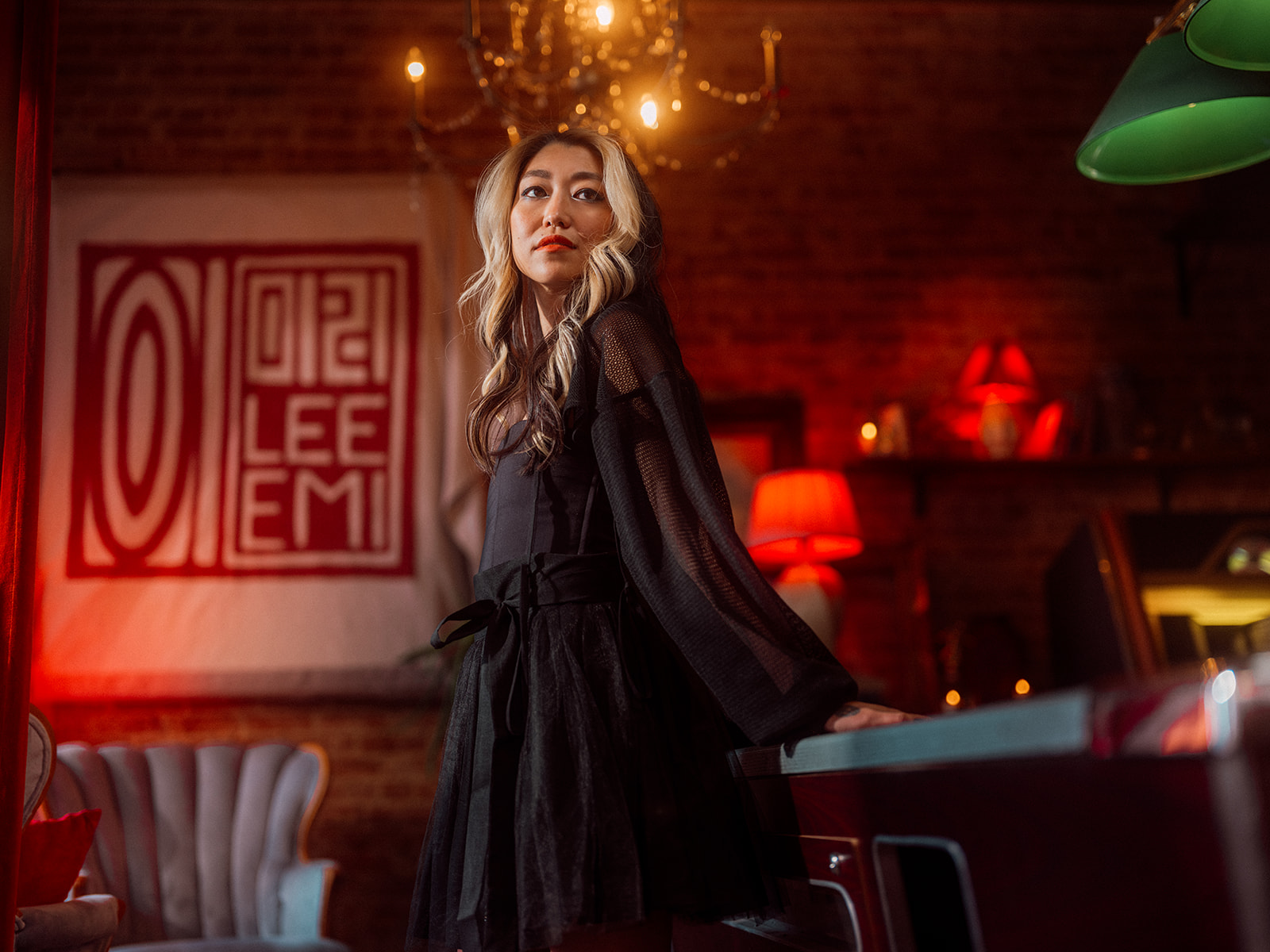
Lee Emi: Taking ‘a deep dive into deconstructing’ her adoption. (Photo/Lori M. Gottschling)
SCROLL DOWN FOR LEE EMI’S MUSIC & NEW LYRIC VIDEO
There’s a ferocity about Grand Rapids’ Emilee Petersmark.
Support our coverage of
West Michigan's music scene
It’s a harnessed fire. And it’ll soon accompany The Crane Wives’ singer and guitarist on the road, as she embarks on her first solo tour as Lee Emi, after releasing her debut full-length studio album, “Destroy Everything,” under that moniker earlier this month.
She’ll head to the East Coast at the top of November, in support of the recent release of her new indie-pop/rock record while celebrating this definitive milestone of entering the arena as a solo artist.

The Album: ‘Destroy Everything’
Lee Emi returns to her home state before Thanksgiving, playing The Magic Bag in Ferndale on Nov. 20 (tickets here) and Bell’s Brewery Eccentric Cafe in Kalamazoo on Nov. 21 (tickets here).
THE LOCAL SPINS Q&A WITH LEE EMI
Local Spins: How have you acclimated to the recent shift in recognition and rapidly growing fan base with The Crane Wives?
Lee Emi: It has been pretty intense to go from 2019, before the pandemic hit, when we all had this conversation as a band, and agreed that we needed to pull back on touring. Up until that point, we’d been touring pretty rigorously. Before, it was like we were doing what everybody was doing: sleeping in the van, or sleeping on floors, or all crunched up into one room, trying to just maximize what you could pull in, and sacrificing comfort, sacrificing your health.
Now, we are able to tour a little bit smarter. We each get a bed. It’s amazing. We have a crew now as well, and they have made being on the road so much easier, because now we’re not trying to wear every single hat. I’ve always loved touring, you know, even when it was really hard, even when it wasn’t super comfortable. So it has been a night and day difference.
Local Spins: What is the interaction with fans like each evening?
Lee Emi: We all feel a large amount of responsibility to those people who show up to shows … that we do a good job, and to get to wherever they are. So a lot of what touring is for us is trying to meet the fans where they’re at. Thank them for their support and to give them a good show. And it’s been just like a crazy 180-turnaround from what we were experiencing prior to the pandemic, which was commonly empty rooms and $20.
Local Spins: Have you played any towns or venues that were empty when you first played them years ago; but returned recently to a sold-out crowd?
Lee Emi: Yes. I remember one night after a show we went out to dinner the first night we rolled into town. And we went to a venue that we had played back in 2014/2015-era. Played to maybe five people in the backroom of a bar. So fast forward to present day: We all wandered into this bar … and they had turned the back room into a virtual golf simulator.
They don’t even have music anymore. And we were playing a venue down the street. It was just one of those things like, dang, I bet that the golf simulator makes them so much more money than we did when they booked us more than a decade ago. What a crazy juxtaposition to be in that s—ty small bar and realize that it wasn’t even profitable for them to have music. And to recognize, ohhh, we’re gonna have a great night, right next door, singing with a room full of people.”
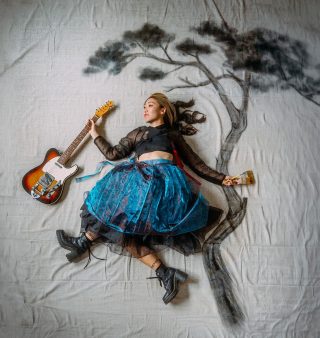
Lee Emi: Learning to be more confident in the music industry. (Photo/Lori M. Gottschling)
Local Spins: In this new era of The Crane Wives and also this new cultivation of your solo project, is there anything you’ve learned about yourself and who you are, what you need, as an individual?
Lee Emi: Oh, absolutely. I think that a lot of the focus is on No. 1: Do we create this machine that works well for everybody, and is efficient, and can meet the needs of the audience, versus with the solo project — instead of collaborating on that idea with a team — doing it kind of alone. I think that this whole process has taught me how to be more confident in my decisions around the industry. But I definitely think that with that experience comes some level of confidence that I don’t think I need.
I definitely feel like I needed it to do this solo project to be able to tell the stories that I want to tell and feel comfortable being vulnerable in that way. I think that The Crane Wives’ new platform and kind of building the foundations of that and embracing what it means to be at this new spot, this new place, this new era. I think that without that, I wouldn’t have been able to have the drive or the confidence to make me all the things that I wanted it to be. So I’m very grateful. I feel like the timing was necessary.
I had to go through the pandemic and I had to kind of lose access to these things that meant a lot to me so that I could come back at them harder and with more gratitude and just with the right headspace of like, we are going to make this a fun and exciting experience. And doesn’t have to be perfect. I don’t have to shoo away all of those insecurities for it to still be good.
Local Spins: How does taking your first step as a solo artist feel, now that you’re well into it?
Lee Emi: It’s been really scary to be without the team of The Crane Wives, you know, like we are a creative team. We are and we have supported each other and everything for so long. And it’s really easy to be one of four instead of just one.
I think I have a lot of fear that if I were to try to step out on my own, there’s no way I would be successful because I can’t do it on my own. What makes The Crane Wives special is the teamwork. All that is true. But I have had the most amazing team. I think that’s been like the most incredible and surprising thing about this project.
LISTEN: Lee Emi, “Destroy Everything”
Local Spins: What influenced your journey through creating these songs and this album?
Lee Emi: As we were compiling everything, I was doing a deep dive into deconstructing my adoption. So after the pandemic I had asked my parents for my adoption paperwork so I could see the details for myself, like my original birth certificate, pictures of my foster family. You know, there’s a lot of stuff that I had really tried not to be curious about because I felt like it was an unsafe place to be — like I didn’t want to seem ungrateful or like create rifts between me and my parents, my adoptive parents.
So it took a really long time to feel safe enough to even ask. But over the pandemic, my partner and I had made the decision that we wanted to try to get to Korea as soon as the world opened up and was safe enough to travel again, because I was scared I was never going to get the chance again.
Local Spins: How did visiting Korea affect you?
Lee Emi: I had an incredible life-changing experience in which I explored the local music scene and met indie musicians in Seoul and went to a festival at the DMZ. I really tried to connect with the parts of Korean culture that I felt were the most easy to understand for me as a foreigner. And it was incredible. It felt amazing to be a Korean in Korea. I think a lot of building this record was trying to process a lot of that, which feels like a window is closing.
There’s a lot of things that I think I wish had been addressed when I was younger. I have been to a lot of adoptee-informed trauma therapy in the past few years and it has completely changed my life in terms of how I see myself and how I see my own emotions and the way that I react to things. I just wish that I had had this knowledge, this support, and this understanding a lot earlier in my life.
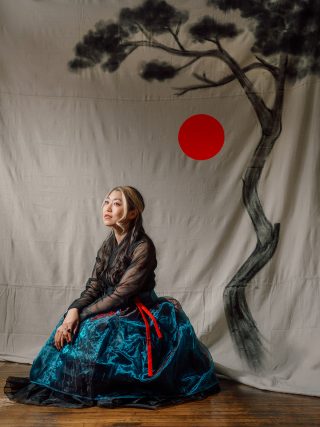
Embracing Her Roots: Lee Emi had a life-changing experience in Korea. (Photo/Lori M. Gottschling)
Local Spins: Where does that refined and poetic sense of anger and urgency come from on the new record?
Lee Emi: I get kind of angry. I think a large part of the anger on this record is dealing with a lot of the stuff that was beyond my control, didn’t feel fair, and there was literally nothing that you could do about it. And a lot of that comes from the trauma that I experienced, again, outside of my control as a young person growing up in an environment that was super homogenous and didn’t have people who looked like me. So I think that a lot of this record is processing that journey and I feel very grateful to have had the outlet for sure.
Local Spins: Have you always had a curiosity for your culture and heritage; your Korean background? Or have there ever been times where you have felt the need to dilute it or blend in?
Lee Emi: I think that I’ve always wanted to be connected to my Korean heritage. When I was younger, my parents, they did the best that they could. I was adopted in the late ’80s and there were a couple of programs for international adoptees at the time, but not a ton of information about the psychological impact of international adoption, transracial adoption. So Korea kind of felt like a costume.
Being Korean kind of felt like a role that you play that you were assigned because you’re and I really just wanted to be normal. I wanted to be like everybody else in my subdivision. I wanted to be like everybody else in my class and it was a lot easier to kind of pretend that I didn’t want to have connection to those things than it was to feel isolated and alone because you didn’t have it, right?
Local Spins: In what ways did disconnecting from that part of you look like?
Lee Emi: My brother and I would participate in the microaggressions against ourselves and you know, become part of the punchline. You didn’t want to be laughed at, you know? Obviously, our understanding of what it means to be a minority in America has changed quite a bit as we grew up.
I’m really hoping that we can give some of that to my nephew, some of that wisdom so he doesn’t grow up self-hating or embarrassed or ashamed of who he is, wishing that he was something different and so like a lot of this feels like a reclamation, you know? I wasn’t able to pronounce my Korean name properly all my childhood and so to kind of reclaim the name as my stage name, it feels very powerful.
Local Spins: Any stops along your that have you particularly eager and ecstatic?
Lee Emi: I love Chicago. I’m a really huge fan of Chicago. And I’m playing Lincoln Hall, which is an absolute dream, so I’m f—ing pumped. I also have a show in Boston. The chaos, the energy is, it’s crazy.
(Lee Emi plays Crystal Ballroom in Boston on Nov. 14 and Lincoln Hall in Chicago on Nov. 22.)
VIDEO: Lee Emi, “I Warned You”
Copyright 2026, Spins on Music LLC