


With Grammy-winning banjo star/comedian Steve Martin playing a sold-out show at Meijer Gardens, this Local Spins Sunday feature takes a look at why young folk, pop and jam-band musicians are getting ‘picky.’

Banjo-Meister: Michael Arlen Bont of Greensky Bluegrass says the instrument represents “real American style.” (Photo/Anna Sink)
By Mary Mattingly
LocalSpins.com
Support our coverage of
West Michigan's music scene
Once an unflattering icon of gap-toothed hillbillies, the banjo today is frequently seen in the hands of jam-happy hipsters.
It’s also in the able hands of legendary, silver-haired comedian Steve Martin, touring this summer as Steve Martin & the Steep Canyon Rangers with Edie Brickell. He returns to Frederik Meijer Gardens & Sculpture Park on Monday for his second sold-out appearance at the outdoor amphitheater.
So how did an instrument that has traditionally been associated only with finger-pickin’ bluegrass – and the butt of numerous musician jokes – become so popular with younger crowds? From folk to pop music, the banjo these days is seen on stages anywhere and everywhere.
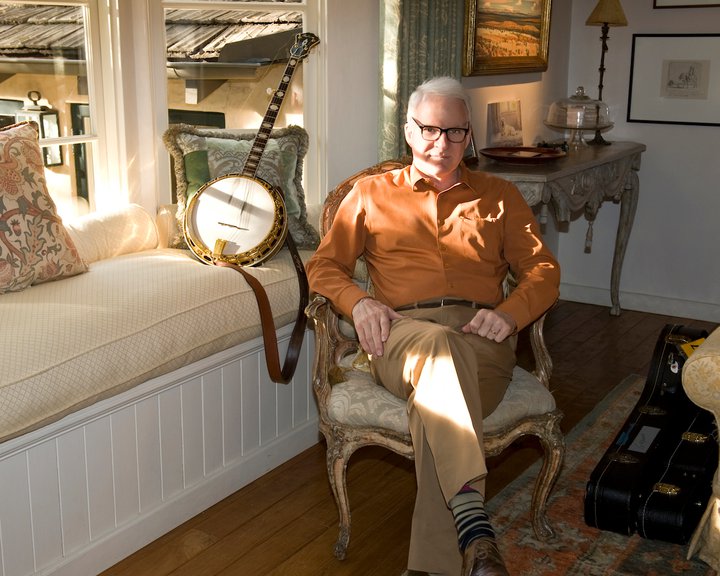
Steve Martin plays at 7 p.m. Monday at Meijer Gardens.
“When someone hears the loud crack [the] banjo puts in their ears, [they] can’t help but smile,” says banjo player Calder Baker, a Grand Rapids native. “Many can vouch for that.”
Today, the banjo still plays an integral role in bluegrass. Baker picked up the instrument after moving to Howard City at the age of 12. Now, he’s relocated to Johnson City, Tenn., and plays for up-and-coming bluegrass band Mountain Feist, based in Asheville, N.C. He remembers picking up the banjo after being introduced to it by the Gitchel family, owners of a music store in Howard City.
“Living in Grand Rapids definitely hindered me in learning bluegrass,” insists Baker, who recently returned to Howard City to play a sold-out show at Zellie’s Opry House with Mountain Feist. “I was playing guitar at the time when I started taking lessons from (the Gitchel family). I wanted to play the banjo because it’s unique, different and the sound brings a smile to my face.”
EXPANDING THE INSTRUMENT’S REACH BEYOND BLUEGRASS
Jam bands have embraced the instrument, too.
“I discovered the banjo via Jerry Garcia,” says Michael Arlen Bont, banjo player for hard-touring West Michigan favorite Greensky Bluegrass, which recently wowed big crowds at the Electric Forest festival in Rothbury.
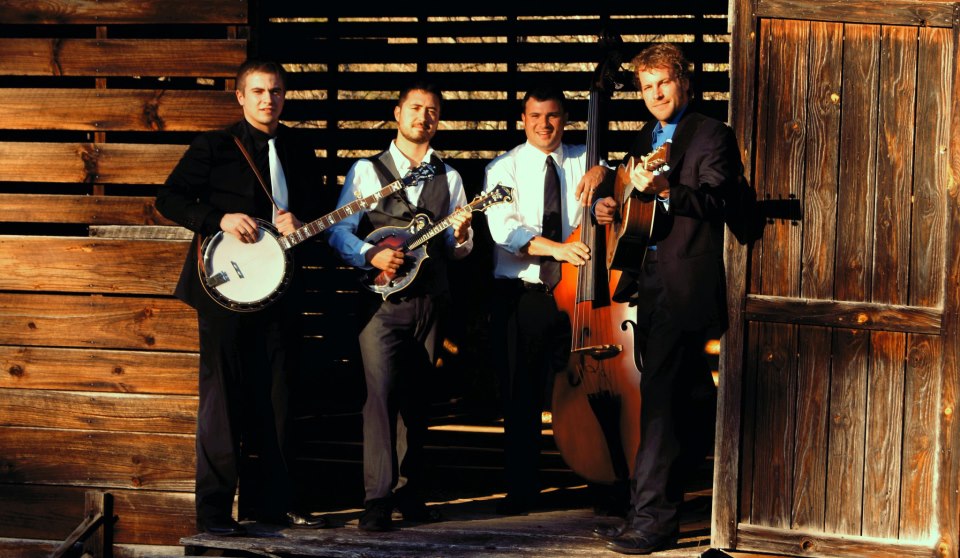
Mountain Feist: Calder Baker, at left, puts Earl Scruggs at the top of his “most influential” list.
After receiving the banjo as a gift from his mother on his 21st birthday, Bont got to work learning how to play it. “I had been playing guitar since I was nine or so,” Bont said. “I was looking for a new instrument to play; I was bored with guitar. [The banjo] was hard to learn. I really had to stay focused at it, I messed around with different books to learn how to play.”
He also got some cues from Garcia, the renowned leader of The Grateful Dead, as well as the legendary Earl Scruggs, J.D. Crowe and the Stanley Brothers. “[Jerry Garcia] has a really interesting style of playing,” Bont says. “He incorporates melody into his Scruggs style.”
Scruggs gets high marks from Baker, too, as well as Jim Mills, Ron Steward and, not surprisingly, Bela Fleck. “My favorite banjo player of all time is Earl Scruggs and always will be. He basically invented the three-finger-style banjo playing that many banjo players use today.”
Clearly, the instrument has come a long way, with jazz fusion groups such as Béla Fleck and the Flecktones spotlighting its versatility as well as folk-pop groups like Mumford and Sons.
Tom Gunnels, banjo player for The Crane Wives, remembers how the addition of the banjo transformed the group’s sound from blues to folk. He’s a recent addition to the banjo game, having picked the banjo up in the fall of 2010.
He notes that singer and guitarist Emilee Petersmark “had a cheap little Epiphone banjo lying around that was her mother’s. Since we didn’t need three guitar players (in the band), I walked home with Emilee’s mom’s banjo. All of a sudden we were a folk band, and I’ve been playing it ever since.”
CHALLENGING, INSPIRING AND A BLAST TO PLAY
But learning the instrument was a challenge. “I think I have been almost subconsciously afraid of the banjo,” Gunnels says. “It was either you played banjo and you played it well, or you didn’t touch it. At least, that was the vibe that I got from it.”
Gunnels drew inspiration from other folk groups. “You started to see the banjo popping up in these folk bands. Some of them could pick pretty well, but nothing like the greats that may have scared you away from learning the banjo. Bands like The Avett Brothers and Old Crow Medicine Show had some extremely simple banjo parts that sounded great.”
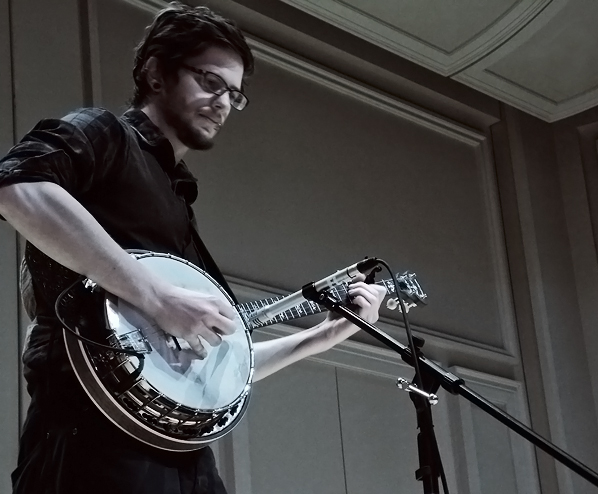
Tom Gunnels (Photo/Anna Sink)
For Gunnels, it’s not how fast you pluck, but what the instrument adds to the group’s texture.
“One of my biggest influences is Tom Waits,” Gunnels says. “And while some of his songs have the subtle plucking of a banjo in the background, it is more about the way that all the instruments work together to form a living groove of a sort, especially with his later stuff.”
More modern incorporations of the banjo show how the instrument is being modified to fit today’s musical styles.
“I think that as the banjo became more of a staple of folk music, it also removed a lot of the connotations of the banjo,” Gunnels says. “The banjo [doesn’t] have to be fast, it [doesn’t] have to be Scruggs style, and it [doesn’t] have to sound like the theme song from “Deliverance.” It [can] be that flavor instrument, that texture that filled it out and gave whatever quality it is you were looking for.”
As a result, the banjo isn’t going anywhere anytime soon.
“I think it’s really neat that people are getting back into it,” Bont says. “The banjo is an instrument that, when brought to life, is a real American style. It’s really unique; there’s a lot you can do with it.”
“A friend once told me that the banjo is an instrument that is just happy that you’re playing it,” quips Gunnels, “and I really think that sums it up just about right.”
Email John Sinkevics at jsinkevics@gmail.com.
Copyright 2013, Spins on Music




John and Mary – great article! Glad it worked out and you were able to get a hold of Mike Bont. We are pretty proud of what Mike and Greensky Bluegrass have accomplished in a really difficult music business.
And all this great talent right here in West Michigan – priceless!
Thanks again! Barb