Local Grins’ Virginia Anzengruber presents an interview with Steve Burns of ‘Blue’s Clues,’ as the actor, musician and TV host prepares for an appearance Wednesday (June 3) at Miller Auditorium.
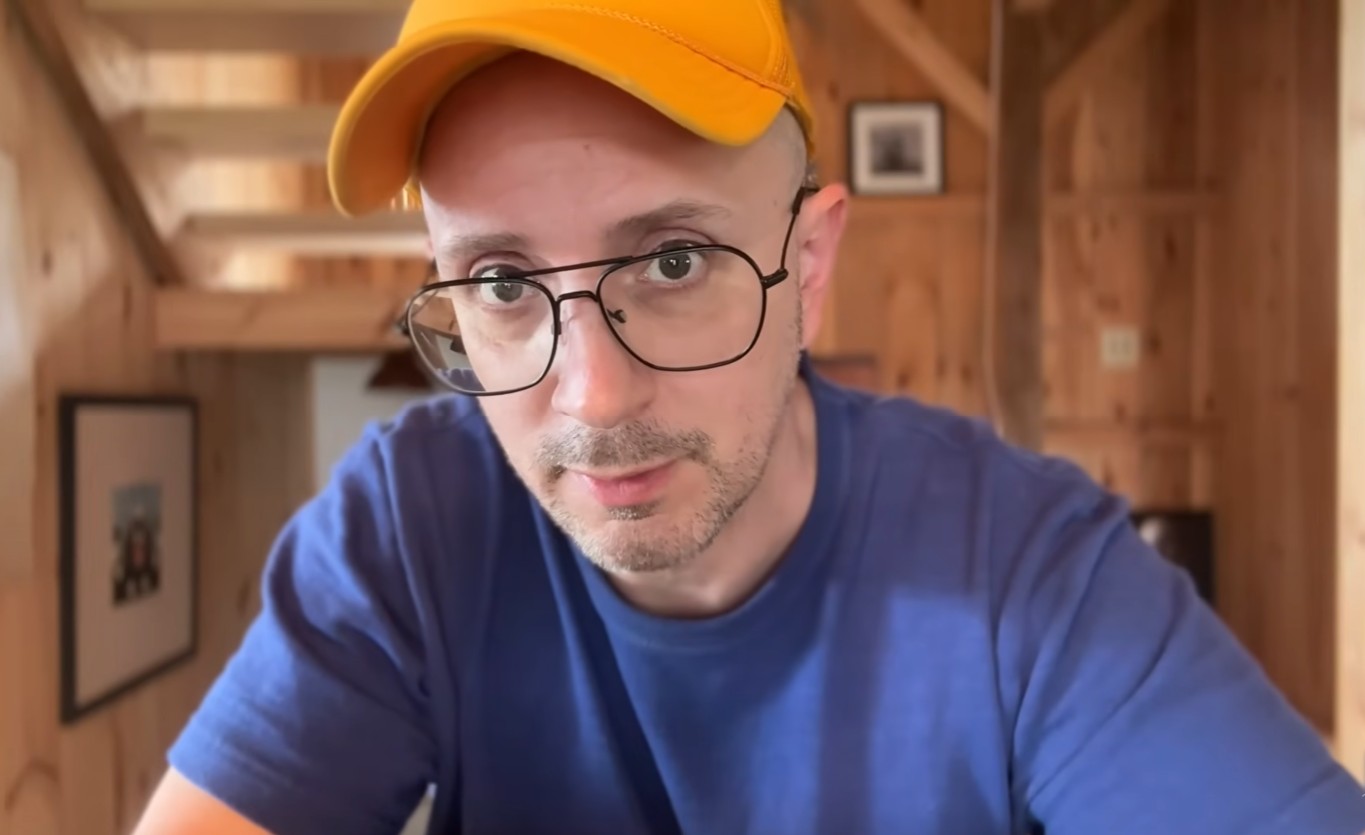
‘It’s OK to Ask Someone You Trust for Help’: Steve Burns of ‘Alive with Steve Burns’
EDITOR’S NOTE: Writer and comedian Virgina Anzengruber, Local Grins columnist for Local Spins, recently chatted with TV host and podcaster Steve Burns ahead of his Kalamazoo tour stop. Win a pair of tickets to the event by emailing virginia.anzengruber@gmail.com with your name and “STEVE BURNS” in the message field.
Support our coverage of
West Michigan's music scene
The conference line played a buoyantly on-brand tune while waiting for the party on the other end to join. A short ding and a voice note alerted me to the fact that Steve Burns, original star of the children’s TV show “Blue’s Clues,” had entered the call, and my entire being was somehow 8 years old again, patiently waiting to know what adventure we’d be getting into that day.
In our 10-minute conversation, Burns was generous, self-aware and deeply grateful for the role that not only catapulted him into television hall of fame status, but has connected him to those same kids who grew up in his living room as adults through his podcast “Alive with Steve Burns.”
Ahead of his upcoming June 3 show, “An Evening with Steve Burns,” at Miller Auditorium in Kalamazoo, Local Grins chatted with Burns about being “Steve,” the ways he loves connecting with adult fans, and what he hopes folks take away from the unique evening in West Michigan.
Tickets, $34.50-$79, available online here. Local Grins readers can also email virginia.anzengruber@gmail.com with their name and “STEVE BURNS” in the message field to be placed in a random drawing for two tickets to the show.
LG: What does it feel like to have fans who have an experience of you that spans decades?
SB: The nature of what I have done was always kind of solitary, in a way. “Blues Clues” was all shot on a blue screen, I was the only actor. It often felt like something very much just something very small that I was doing in a blue world with a camera. And I’ve spent a lot of my career musically writing songs in my bedroom. I never really had a band. A lot of what I have done that is public facing has also been simultaneously very private, if that makes sense. And to think that any of it has reached a lot of people is often difficult for me to get my arms around. But, when I am able to see it with clarity, it’s all of the feelings you might imagine. ‘I don’t feel in any way worthy of that. That can’t be me. Whatever, these people are insane.’ But, mostly, it feels like a giant impossible gift to cherish.
(This multi-generational appeal is not lost on the folks who run Miller Auditorium, either. Director Tracey Lawie notes, “We’re always interested in programming that creates a genuine point of connection with our community, and Steve brings an unusually multi-generational appeal to that conversation. Many people first encountered him through childhood television, but the themes he explores now—mental wellness, curiosity, resilience and communication—are incredibly relevant to audiences today, and of all ages. We saw this as an opportunity to offer something thoughtful, welcoming and a little unexpected alongside our traditional entertainment programming.”)
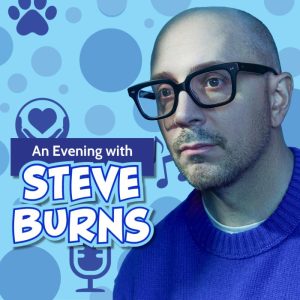
LG: When you’re feeling the weight of everyone’s parasocial relationships with “Steve,” what’s the thing that anchors you back to yourself as a North Star?
SB: Well, it’s easier now, because, in conversation with you is a good example, I feel like I’m speaking very much to a peer. Whereas before, when I was on children’s television, I knew that I was an adult speaking to 4-year-olds, which is a very different dynamic. Now, I feel, when it gets heavy, when I read the comments, and when people compare me to Fred Rogers or something, what I go back to is this idea of what I call ‘the struggle’ and that is something that we all share. Every single one of us. It’s not optional. We’re all in the same boat. And I go back to the reality that I’m not some sort of exceptionally, wonderful, wholesome, wise guru on a hill somewhere. I’m not that at all. What I am is exactly like everyone else: I’m a fellow passenger on the struggle bus. And that, to me, is a place [where] I can interact publicly and authentically at the same time. I don’t ever want to be seen as someone in the mental wellness space who has answers for someone. I don’t have that. I have what we’ve always had, which was an ability to run around the universe, and look for little bits of information, and ask better questions about it. I can operate from that base and not feel [stressed] about it.
LG: What’s something that you hope folks take away from ‘An Evening with Steve Burns?’
SB: I hope that if there’s anything that they’ve learned from talking to me or watching “Blue’s Clues,” is that it is very much OK to look someone in the eye and ask for help, if that’s what you need. That was the great lesson that Steve taught me. It was something that I did on “Blue’s Clues” and was really reluctant to do in my actual IRL life. Because, I thought there was a fair amount of shame around asking for help, it was admitting weakness. But, I’ve learned that it’s not. I’ve learned that it’s actually a confrontational act of courage to do so. And, that, I think, would be a takeaway I would love for people to get. To look at this guy who asked you for help every single morning, to identify which object in his house was a graham cracker. But, that’s actually a wonderful thing to model: that it is OK to ask someone you trust for help when you need it.
From Sara Bower, Miller Auditorium Marketing Director: “Steve shaped an entire generation’s emotional language in this very gentle, thoughtful way—and bringing him to Miller for an evening of conversation among those who have been so positively impacted by his work is very exciting for us. We live in a time where people are deeply hungry for authenticity, kindness and community care. Steve’s work around mental health and emotional wellness resonates because it meets people where they actually are. Bringing this conversation to Miller felt important to us—not just as presenters, but as people who believe the arts can foster empathy, healing and human connection in a world that desperately needs more of all three.”
Copyright 2026, Spins on Music LLC