The Otsego singer-songwriter who spent time in Nashville before returning to Michigan has formed a new all-star band with a new album on the way. Writer Michael J. Breazeale digs in to his journey.
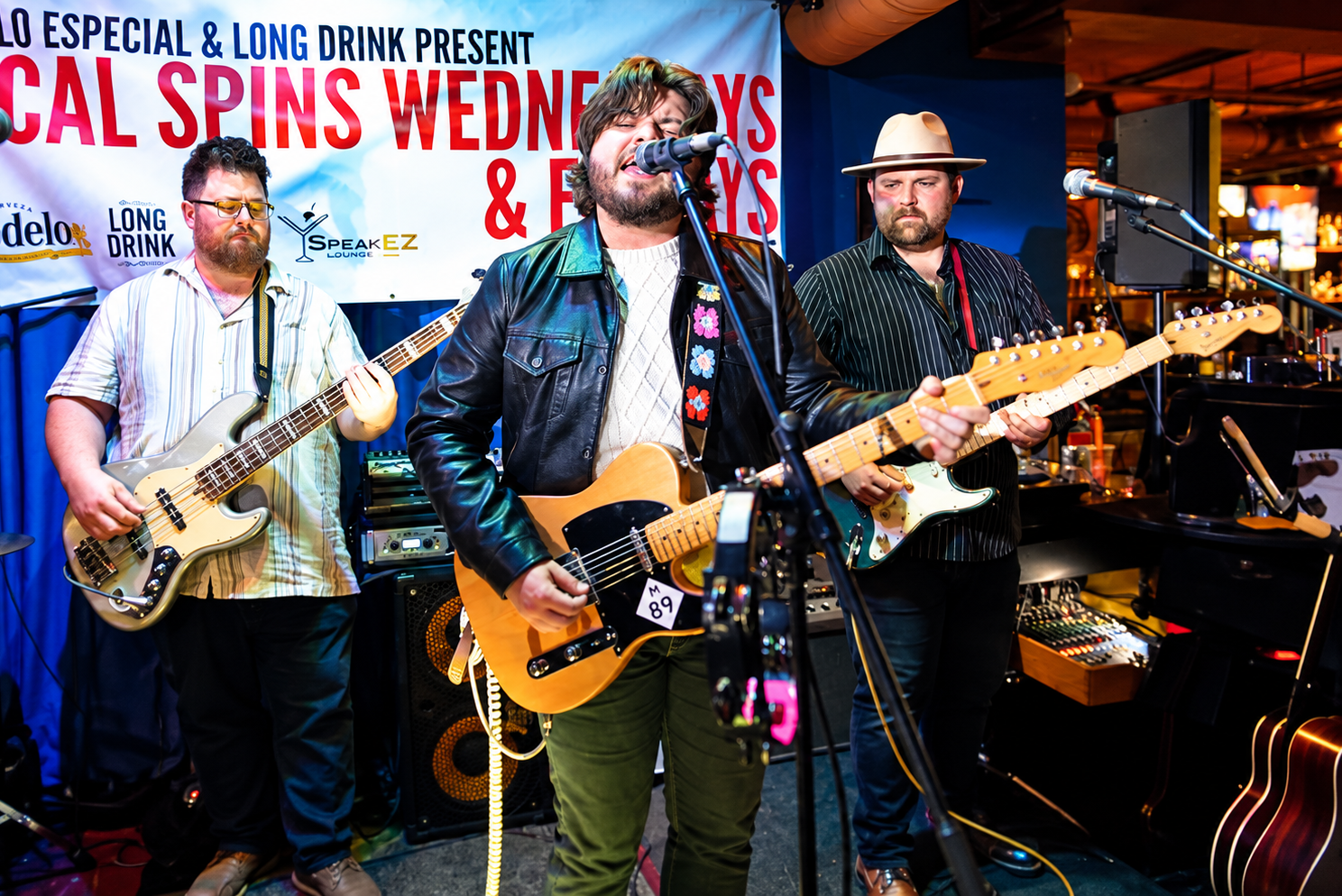
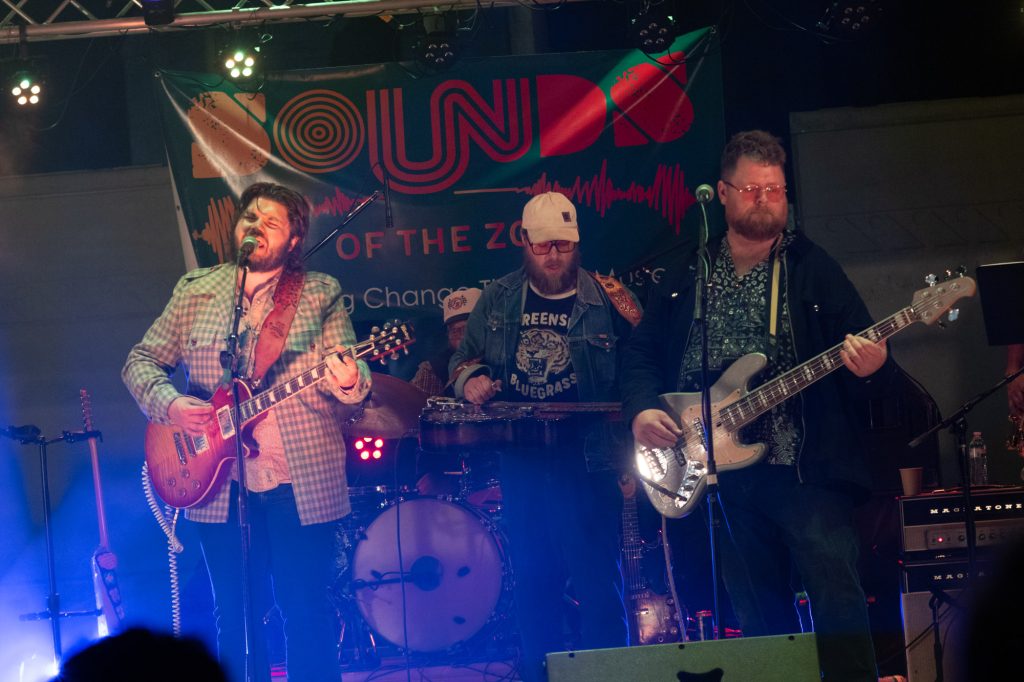
Myron Elkins & The Dying Breed: Embracing heartland rock after enduring a series of setbacks. (Photo/Katy Batdorff)
SCROLL DOWN FOR VIDEO
Support our coverage of
West Michigan's music scene
In 2024, Myron Elkins lost his record deal, got dumped over a text, and broke down on top of a mountain driving to a gig –- all within 24 hours.
But as Hemingway said, “When you get the damned hurt, use it.”
With a new sense of direction and an independently released sophomore record under his belt, the Otsego-bred Elkins is using his hurt for all its worth.
Elkins and his band, The Dying Breed, are now gearing up to release their third full-length album, “The Middle America Sessions,” tentatively slated to drop in January 2027.
Heralded by its lead single “Colorado High,” the 12-song LP spurs listeners through versatile terrain, from rock ‘n’ roll and country to blues and soul.
“Colorado High” was released in mid-September, and finds Elkins at his most country, smoking his solace west of the heartland. The track also marks the beginning of a new chapter for the former welder as he reflects on a season punctuated by dashed hopes and heartache.
VIDEO: Myron Elkins, “Country High” (Live at Dogtown Studio)
Elkins enjoyed early career success at 19 years old when he signed with Low Country Sound, an imprint of Elektra Entertainment, and moved from his Allegan County home to Nashville.
His debut LP, “Factories, Farms & Amphetamines,” was released in early 2021 and was produced by Dave Cobb, best known for working with the likes of Jason Isbell, Chris Stapleton and John Prine. As a result, Elkins soon found himself touring in support of Charley Crocket and other industry juggernauts. He even joined Willie Nelson’s Outlaw Music Festival twice, alongside stars such as Bob Dylan and John Fogerty.
When several tracks from Factories were featured on the hit TV show “Yellowstone,” it looked like the world was in the palm of Elkins’ picking hand. But as the summer of 2024 would have it, that didn’t last long.
“Everything started to really tumble down at the same time,” Elkins recalled. “It was weird. We were on our way to a show in Colorado, and I got a text message that I was getting dropped from the label, and another one about my relationship coming to an end.
“The GPS ended up taking us on this crazy mountain pass,” Elkins and drummer Ricky LaDuke explained. “We busted a wheel bearing up there, and we had no cell service.”
Fortunately for The Dying Breed, a man happened to be driving by, saw the broken-down rockers, and pulled over. “He hooked our trailer to his truck and drove us two-and-a-half hours to make our show,” Elkins said. They made it just in time. After their show, another good Samaritan drove them back up the mountain to their van, which had to be towed back to civilization, at a cost of $1,500.
“We had no money to spend,” Elkins said. “So we had the van dropped off at an O’Reilly (Auto Parts) parking lot because we couldn’t pay to have it fixed. We did the wheel bearing ourselves in the parking lot and picked up the rest of our guys.”
The boys were back in business. That is, until the alternator went out.
“We walked the battery back to the O’Reilly parking lot, got there just before they closed, and got the alternator done,” Elkins said. They were back on the road a full 200 yards before the van broke down a third time.
“The serpentine belt went,” Elkins said. “We didn’t put it on right. So we called the O’Reilly guy again. The store had already closed but he helped us get that fixed. Then we drove all the way back to Nashville. By the time I got home, everything was just so bad.”
MOVING FORWARD AFTER LOSING A RECORD DEAL, BAND MEMBERS
It didn’t take long for most of his band to jump ship, too –- everyone except LaDuke, who had returned to the band, and co-founding guitarist Avry Whitaker.
“[Musical] sacrifice can only go so far before it becomes insane,” Elkins said, “And we let it become insane. I don’t blame anyone for jumping off, but it definitely left us in a bad situation. Not only did we lose our record deal, but we lost the people who were there with us from the beginning. So, I had to find crazy people. And they all lived in Michigan.”
He added: “It was too bad. The previous group and I went through a lot and we did some great things together. There’s no hard feelings. It got to the point where it was hurting everybody a lot, and it really should only be hurting me.”
Elkins didn’t hang it up. He and the Dying Breed cut the independently released album, “Nostalgia for Sale,” at High/Low Studios in Memphis, Tenn., then sent the soul-drenched recording to anyone he could think of who might help get the album promoted and distributed.
Crickets.
“We were confident in the material,” Elkins said, “But everyone in [Nashville] said that because we already have an album out with a record label – an album that was pushed but didn’t really work out – there’s nothing they can do for us. The industry doesn’t really care about the music anymore. They go straight to your social media, and if the numbers aren’t there, they aren’t interested.”
Elkins took one last Hail Mary meeting with a bigwig Nashville management company toward the end of 2024, hoping they might be willing to help out even a little.
“It was just awful,” he said. “It was one of the most disgusting ways of looking at art, and what we’re trying to do that I have ever heard. They had the resources to help, but it’s just not about the music for them. That was really the end of the line for us.”
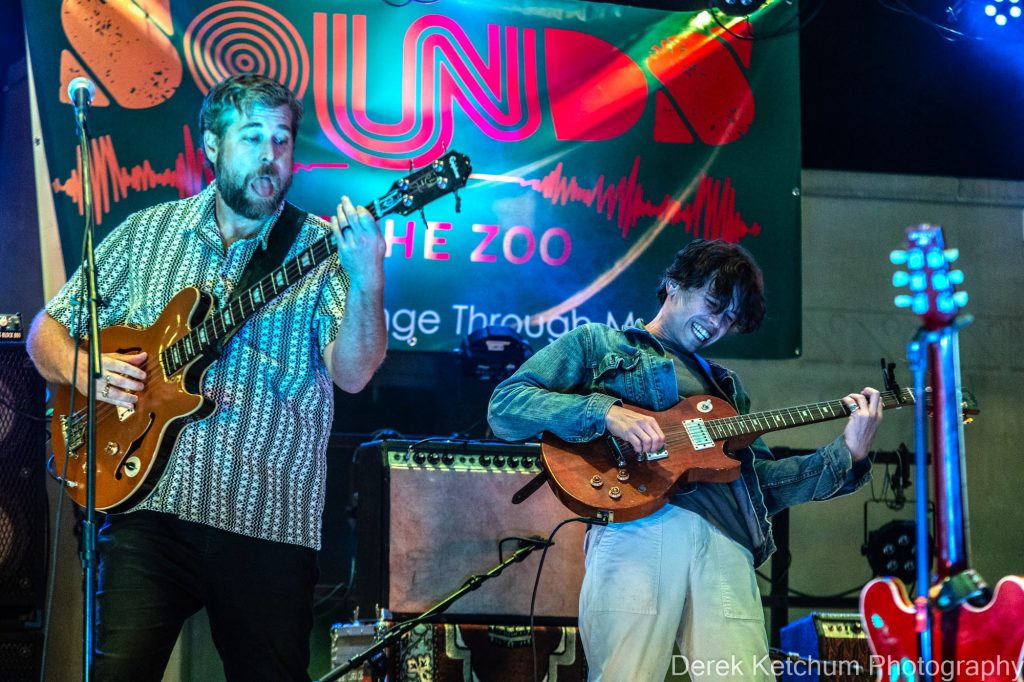
Back in Michigan: Elkins and band headlined Saturday at the recent Sounds of the Zoo festival. (Photo/Derek Ketchum)
To add insult to injury, Elkins was lambasted throughout the meeting for recording “Nostalgia” in the first place. “They told me there was no point in cutting a soul record, and that we should have cut something cheap, stripped-down and acoustic,” Elkins said. “Voice memos, essentially.”
They told him to stop wasting his time and money playing shows, and to focus on increasing his engagement on TikTok if he was ever going to talk business with them again.
“That meeting went against everything I believe in,” Elkins said. “It was pretty much them telling me who I need to be. So that was the last hoorah. From then on, we decided to just do it ourselves.”
Elkins’ monthly Spotify listeners doubled after the release of “Nostalgia.” Still, he said it’s pretty hard to jump back into a record deal now.
“Everyone is so viral-driven,” he said. “It’s all about capitalizing on a viral moment, and if that’s not there, they want to try to manufacture one. A lot of young people in the industry are given jobs at these major labels, and their ass is on the line.
“If they don’t sign something that will be instant gratification for the label, they are gone. I saw that real quick.”
Financially destitute, Elkins resorted to couch surfing before ultimately deciding to use what little savings he had left to move back to Michigan.
“A family I met in West Virginia put up some money for us to help finish the record,” Elkins said. “That was huge. Then Ricky came back to the band, and I met my girlfriend, Emily. Some important pillars showed up.”
While “Nostalgia for Sale” showcased Elkins’ maturation as a lyricist, songwriter and human, the soul-infused, Van Morrison-influenced record also affirmed that Elkins is no flash-in-the-pan doomed to 15 minutes of fame.
“All of us jumped off the deep end when we got signed,” Elkins said. “So when everything came to a head, we all kind of scrambled. We started selling everything we had. I think you hear that on this record. The writing is a lot more mature. Hopefully you can feel that it’s real.”
Added LaDuke: “We learned so much with Dave (Cobb in recording “Factories”). As much as my name is on the producer, Myron and I produced “Nostalgia” together.” They even bought their own record press to produce vinyls themselves.
“Charley Crockett told me I had to put (Nostalgia) out on my own, and prove to everyone in Nashville that I can do it without them,” Elkins said. “I mean, that’s what he did, and he’s killing it.”
Elkins recalled the late 2010’s Americana resurgence led by Tyler Childers, Sturgill Simpson, Turnpike Troubadours and the like. Fans resonated with those artists’ veracity and grass-roots ethic, including Elkins, whose 2020 debut EP sonically resonates in that vein.
“At this point, I can adapt to anything. You gotta be able to. You gotta be able to sleep anywhere and get through sketchy situations,” Elkins said. “I learned it pretty fast and I learned it young, like CCR says. You’ve gotta be OK with being uncomfortable most of the time. When you’re comfortable, you can get a little lazy.”
Upon his return to Otsego, Elkins also found a home for his genre-melting style of music: heartland rock.
“It gives me the freedom to be able to pull from country, rock, soul, blues – like Fogerty, Petty, Seger and those guys,” Elkins said. “This next record is really starting to form, and the material feels really good.
“I’ve gotta thank Charley Crockett again for telling me that I’ve gotta find me, and learn to stick up for myself. That’s what we’re doing now.”
GOING BACK TO ‘GROUND ZERO’ WITH COMPELLING SONGS
After turning down work with another noted producer/engineer who wanted to alter his sound, Elkins dove into the band’s authentic, self-engineered material for the new album.
“It’s still exciting,” he said. “Even after going back to ground zero and starting over.”
LaDuke noted that “we keep writing songs and thinking ‘This is way better than the stuff that got us a record deal.’ And that stuff is great.”
Many of the Dying Breed’s new songs –- and they’ve written several albums’ worth of material since “Nostalgia” — already are live staples and fan favorites. While not all of the new tracks will be featured on “The Middle America Sessions,” Elkins said the feedback band members have received has validated their forward trajectory.
“He’s got maybe 20 songs that have been around forever,” LaDuke said. “Plus all the new songs. He and Billy (Gunther of Flint’s Billy Gunther & The Midwest Riders) write some great stuff together. I’m really excited about it.”
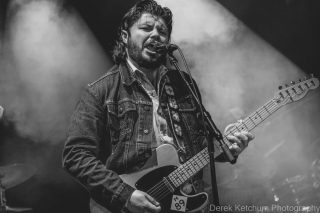
Passion for New Material: Elkins (Photo/Derek Ketchum)
The new album is being mixed by Grammy-nominated producer and engineer Duane Lundy, who also wore the producer hat for “Colorado High.”
Elkins said his music has always been about storytelling, and “Middle America” makes no exception to that rule.
“The guitar isn’t what got me into music at all,” he said. “It was just a tool. Take a song like John Prine’s ‘Angel from Montgomery.’ You’ve got a young man singing, ‘I am an old woman, named after my mother.’ Who’s got the balls to say that? It’s as rock ‘n’ roll as it gets.”
Elkins acknowledged that his ascent, crash and rebirth might look romantic from the outside looking in, but the reality was anything but that.
“I sacrificed everything,” he said. “So that everything we make can go toward this music. I mean, I got promised the world by the biggest names. Coming off that all at once really sucked. It still sucks, and it’s gonna suck. But I’ve always put myself in a position where I could put music first, so that helps.”
Elkins said the band — LaDuke (drums), Ricky Ford (bass), Avry Whitaker (guitar), Billy Gunther (guitar), and Loren Kranz (keys) — has utmost confidence in its songs.
“We are willing to die for them,” Elkins said. “We have the songs. We have the players, and we’re back home.” – By Michael J. Breazeale
Copyright 2026, Spins on Music LLC