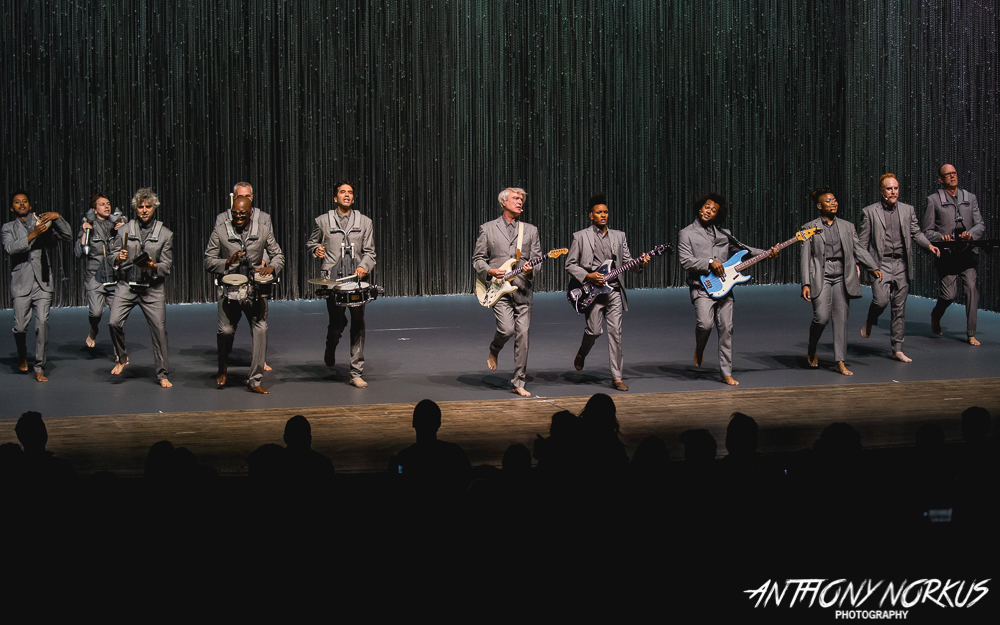
Touring behind his latest album, “American Utopia,” the ever-fetching David Byrne brought a just-as-fetching cast of musicians to DeVos Performance Hall on Wednesday for a theatrical, one-of-a-kind evening.
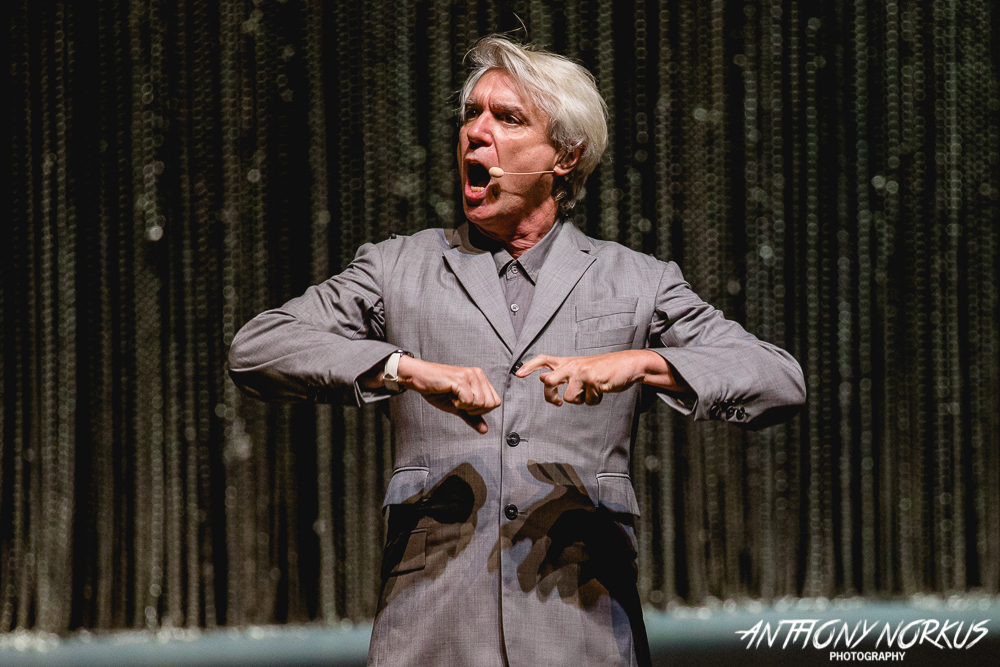
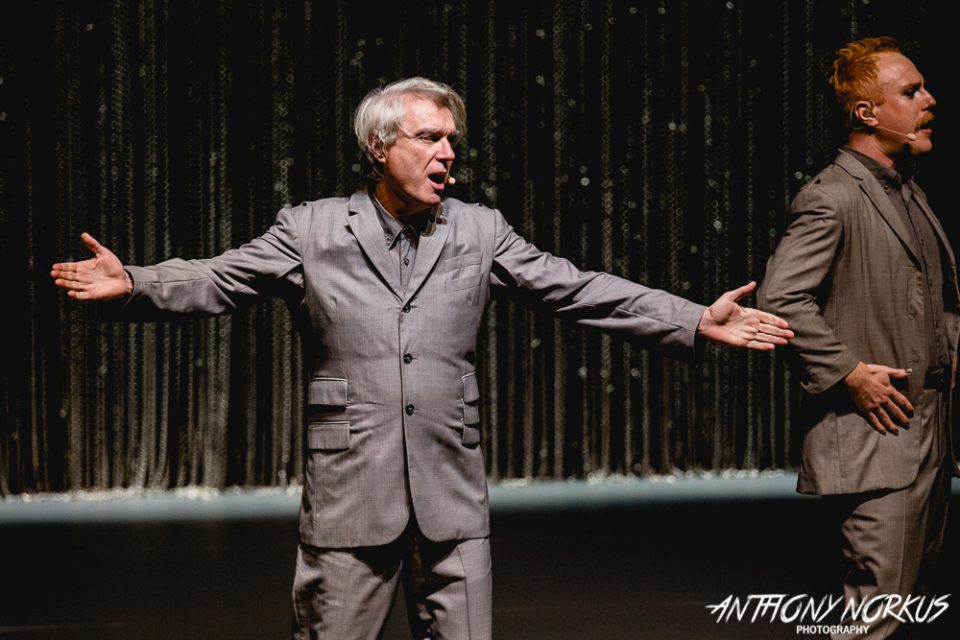
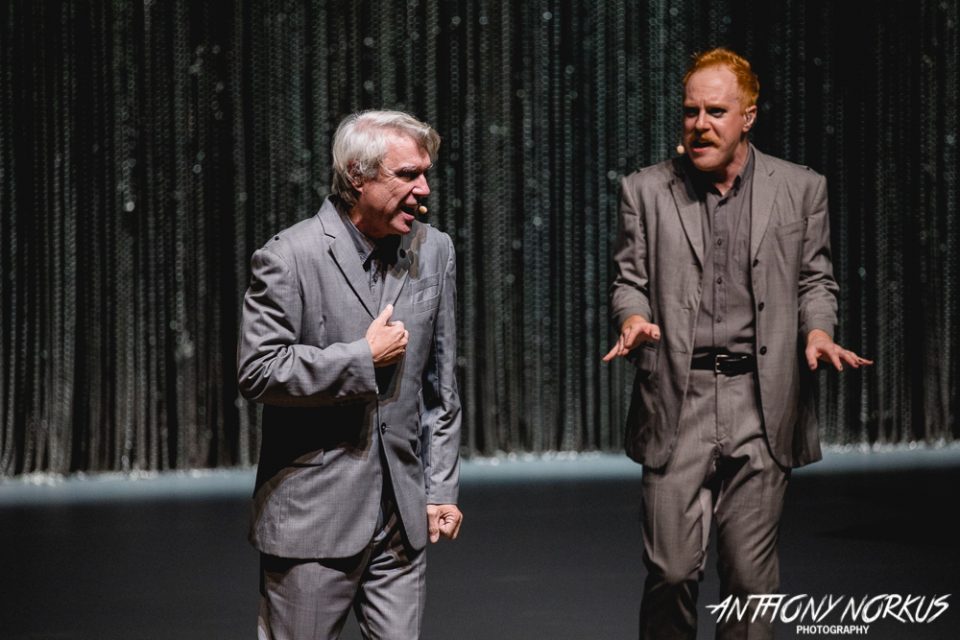
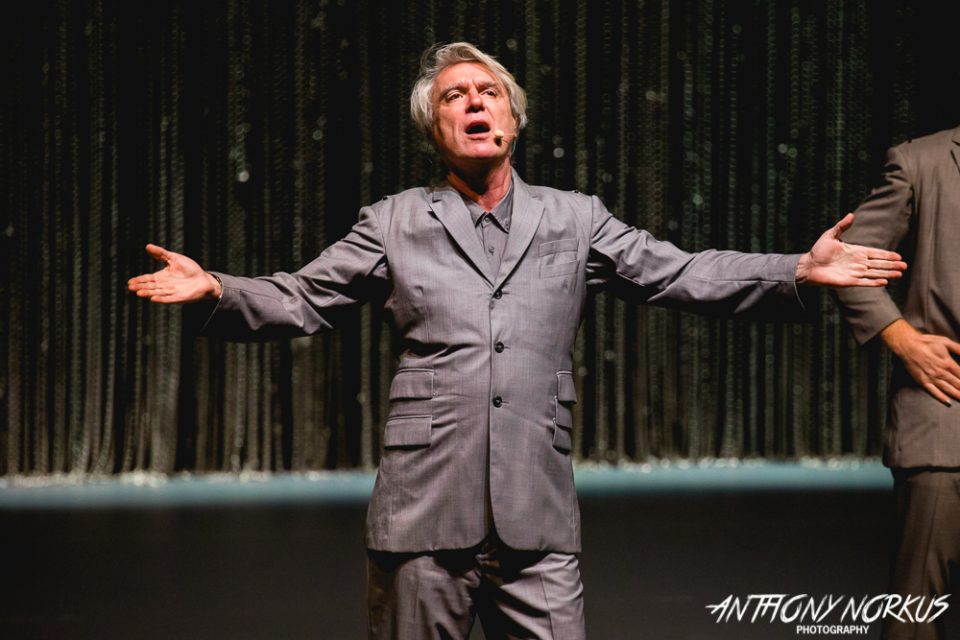
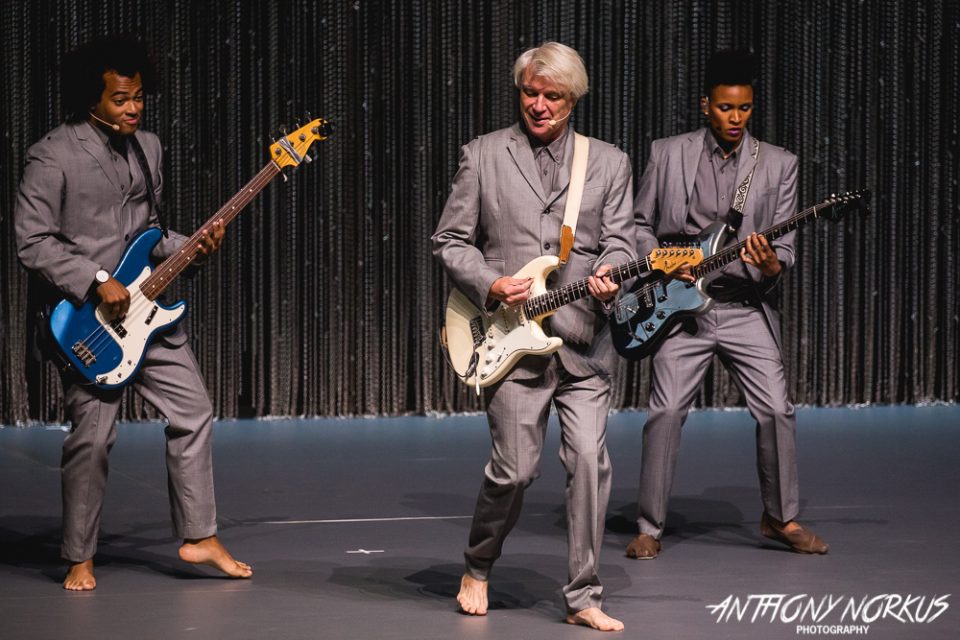
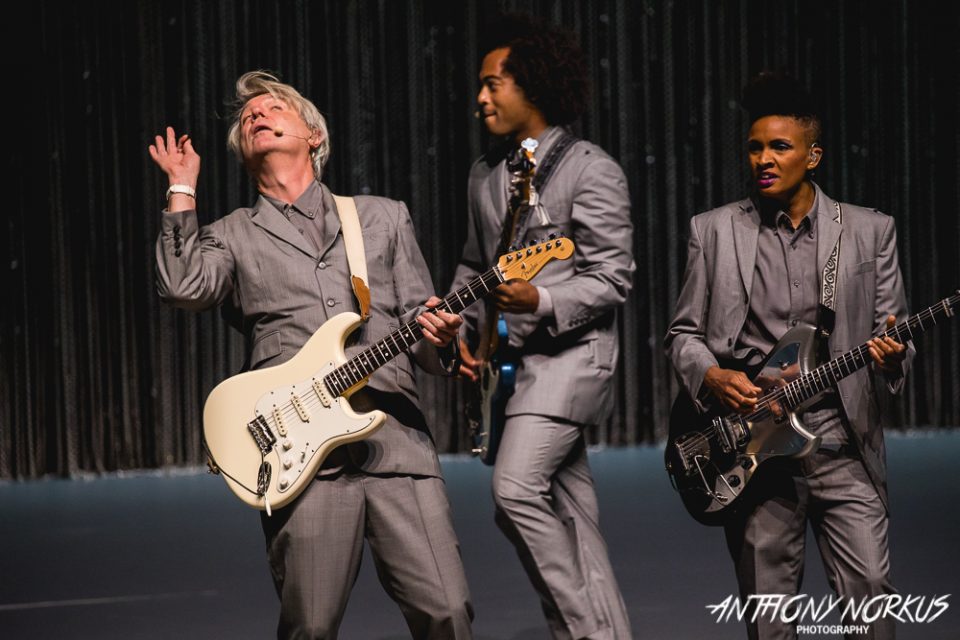
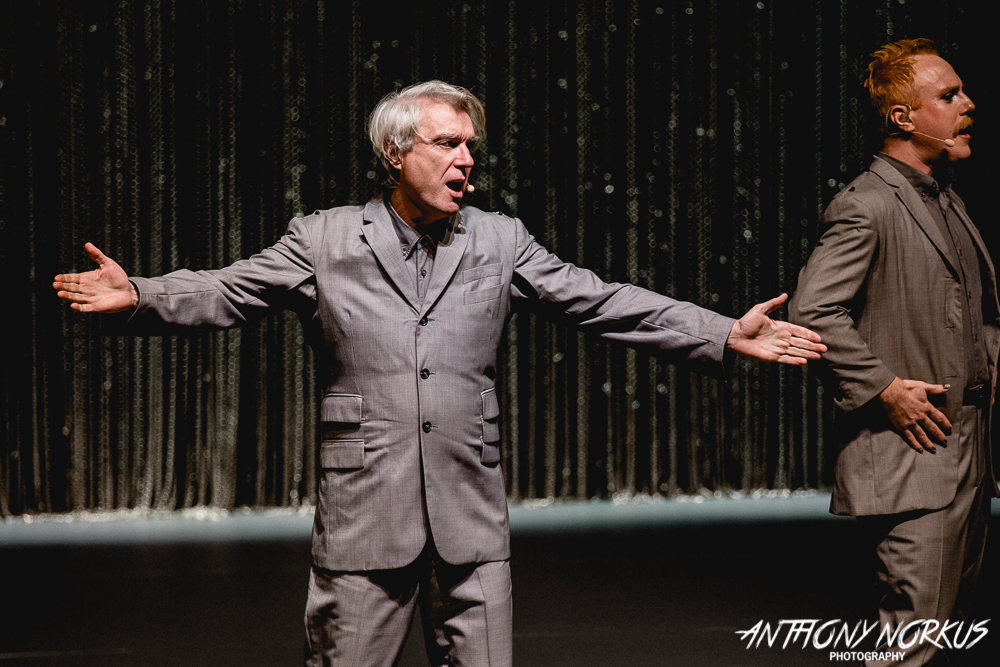
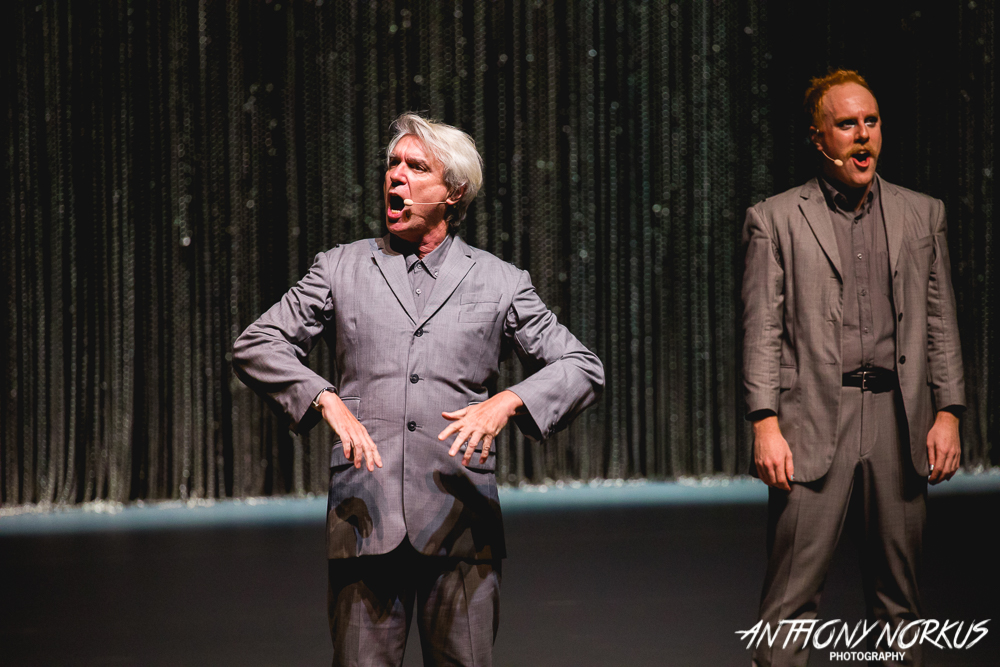
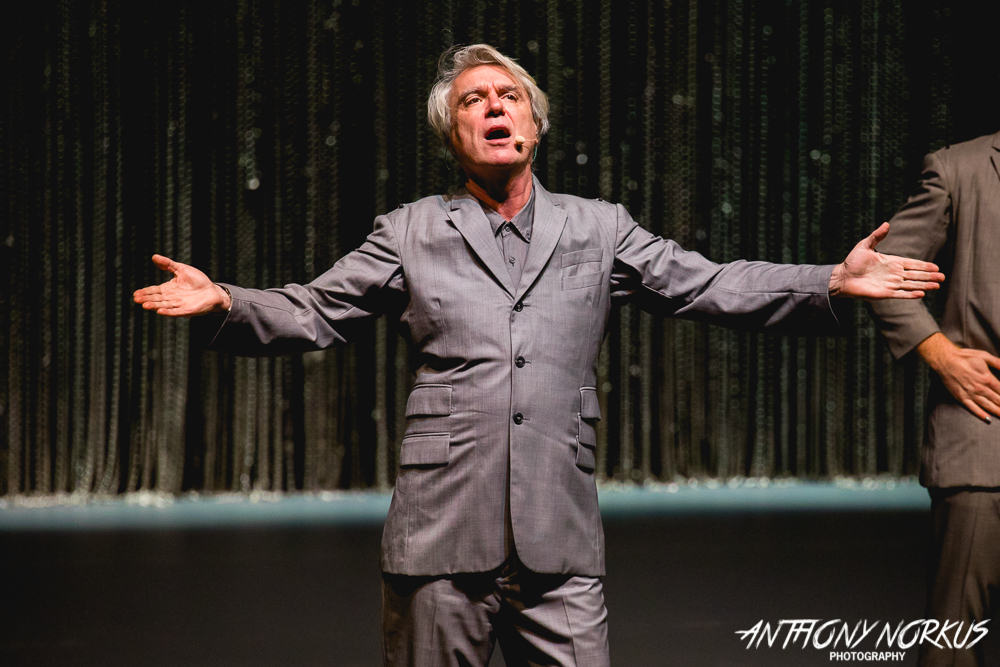
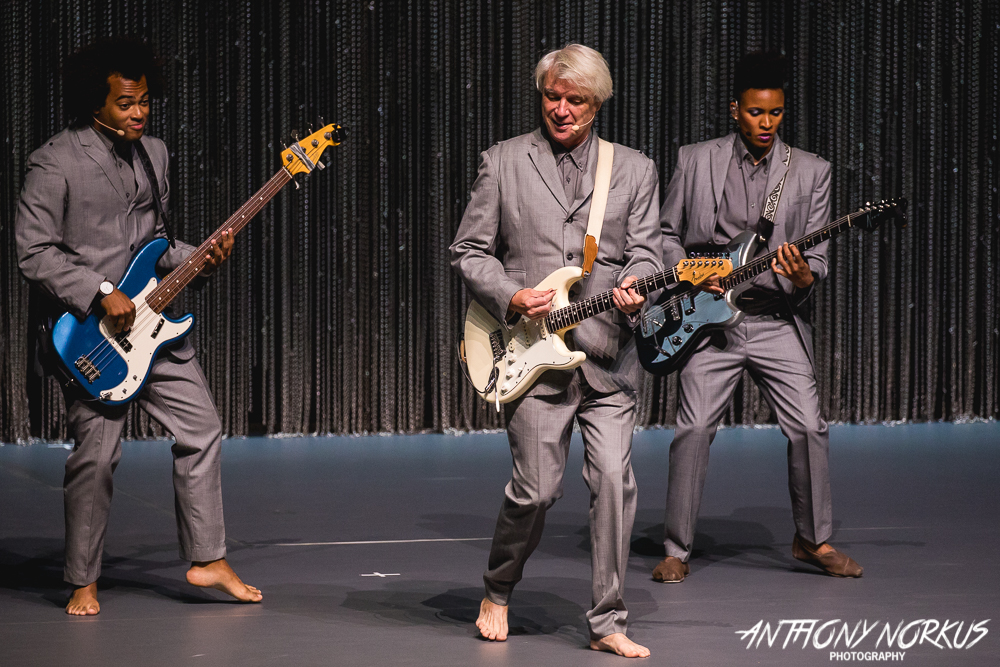
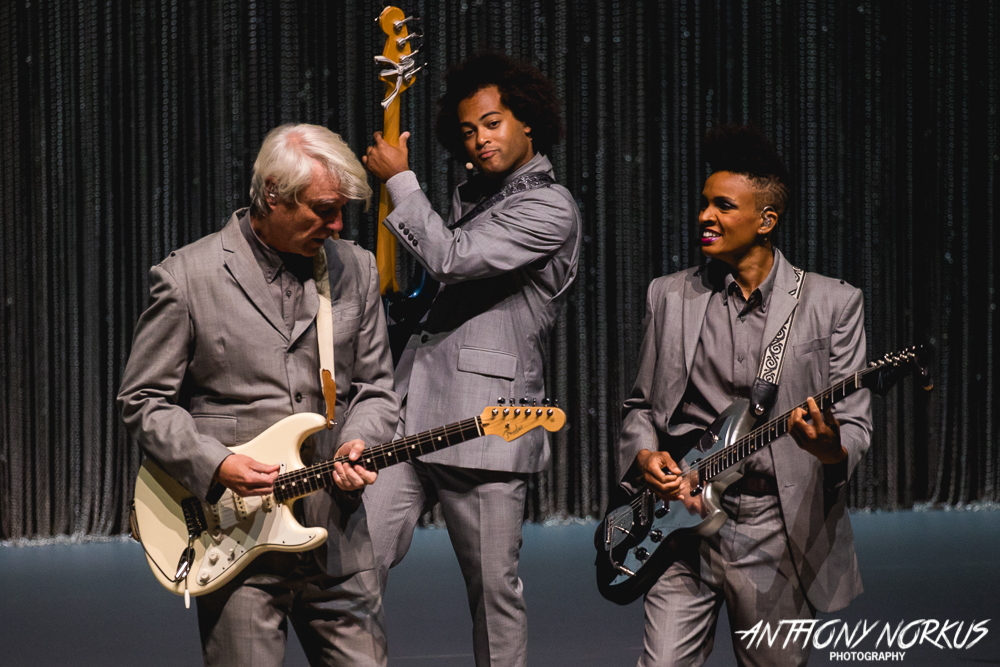
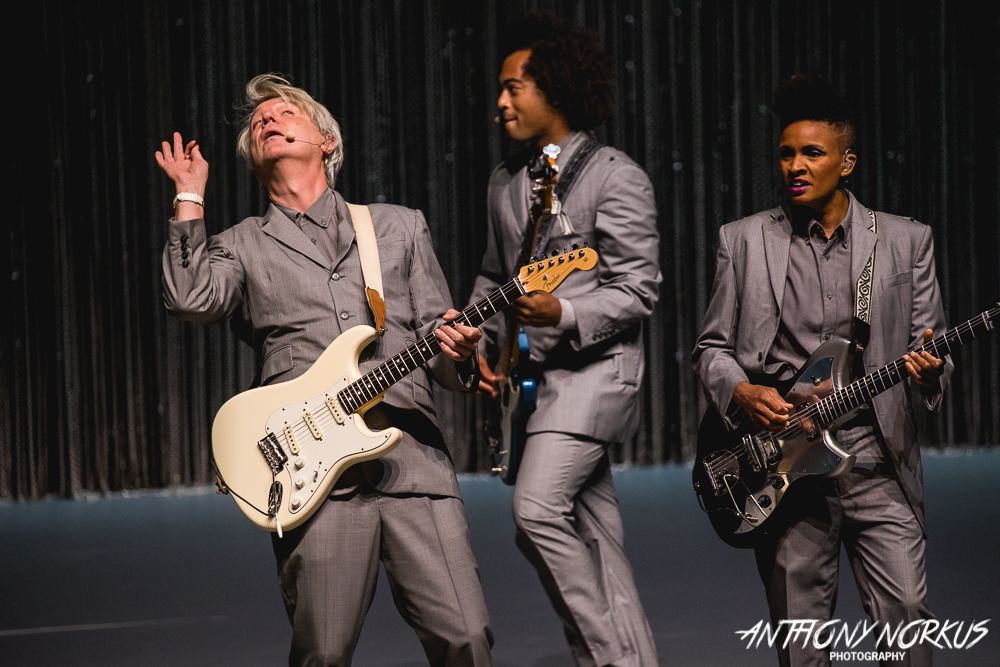
He Dances Like This: David Byrne on stage Wednesday at DeVos Performance Hall. (Photo/Anthony Norkus)
SCROLL DOWN FOR PHOTO GALLERY
Support our coverage of
West Michigan's music scene
Twice in a lifetime, David Byrne has transformed how I think about music.
The first was when I read his 2012 book “How Music Works,” a half-memoir, half-philosophical treatise on a form of human expression to which he’s contributed as much as almost any single contemporary practitioner. In one sweeping passage that I make it a point to re-read every year or so, Byrne explains how creative vision is always subordinate to context — not a radical idea, but radical in the simple clarity with which he expresses it.
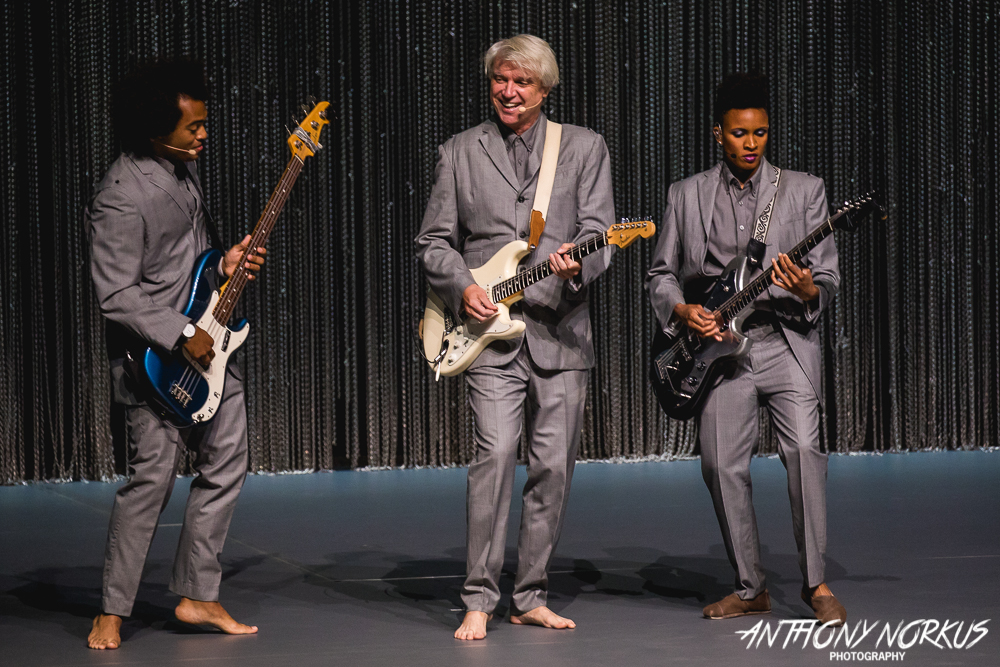
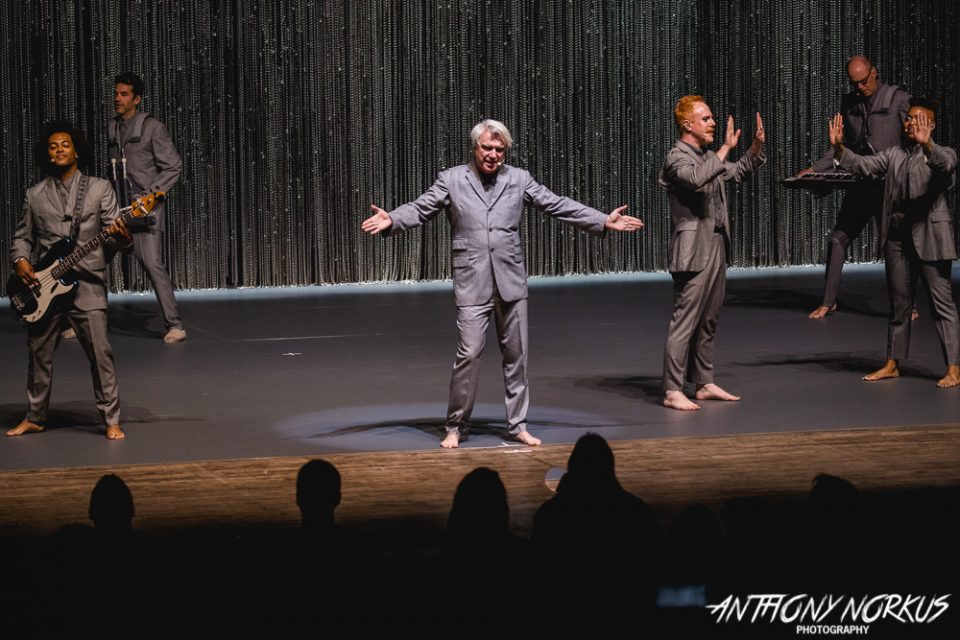
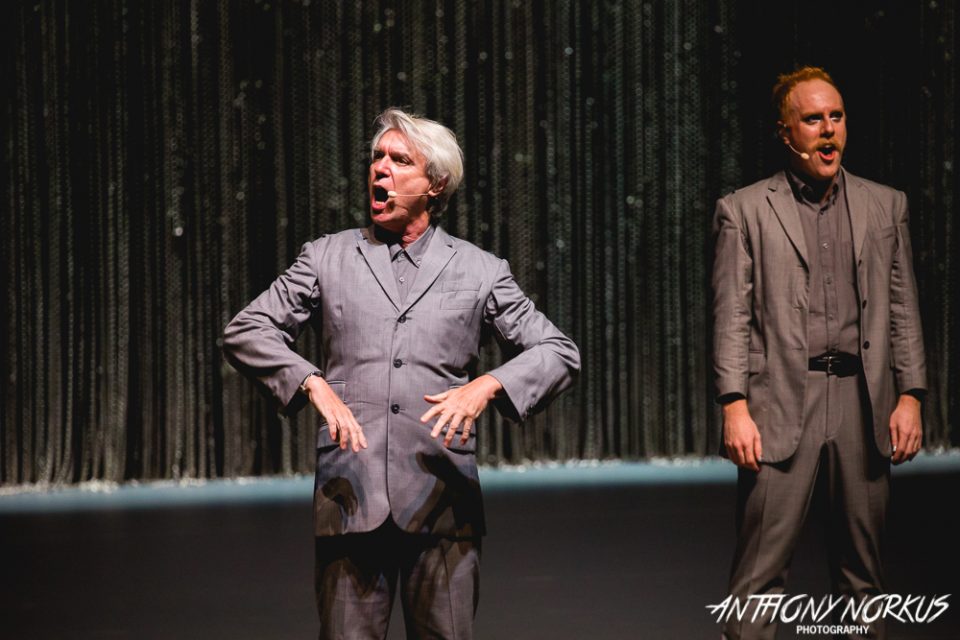
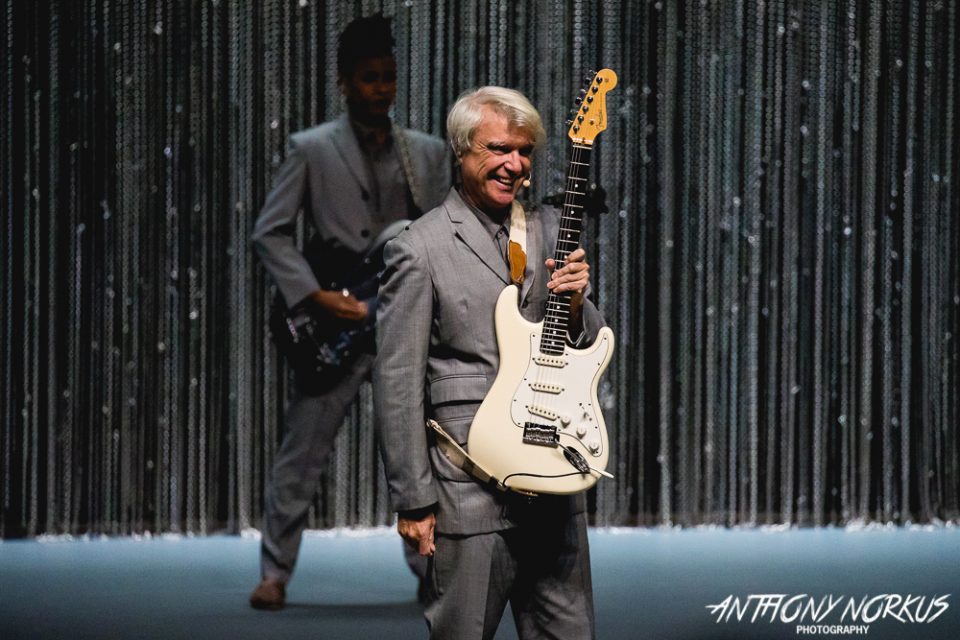
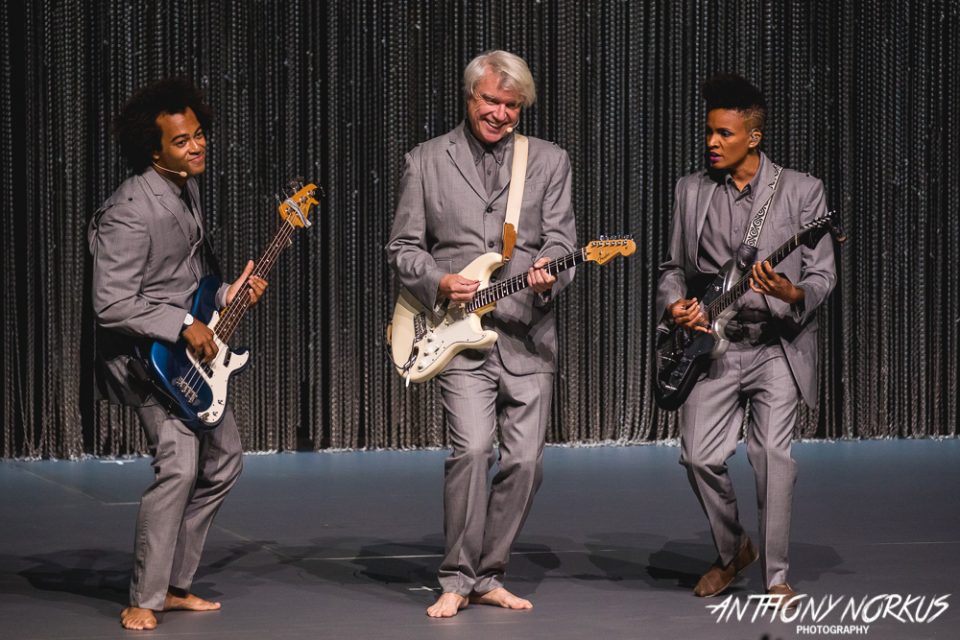
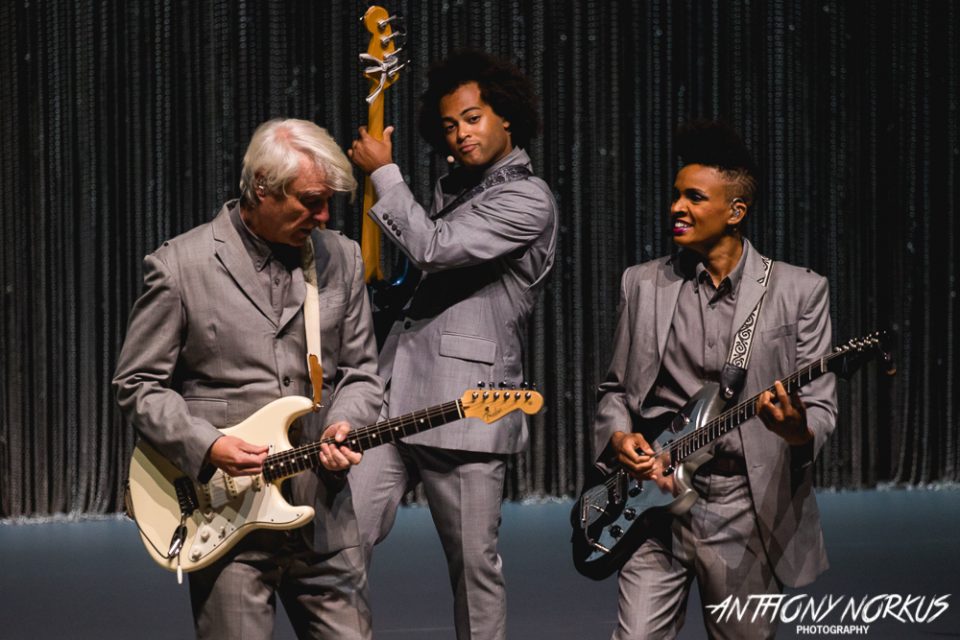
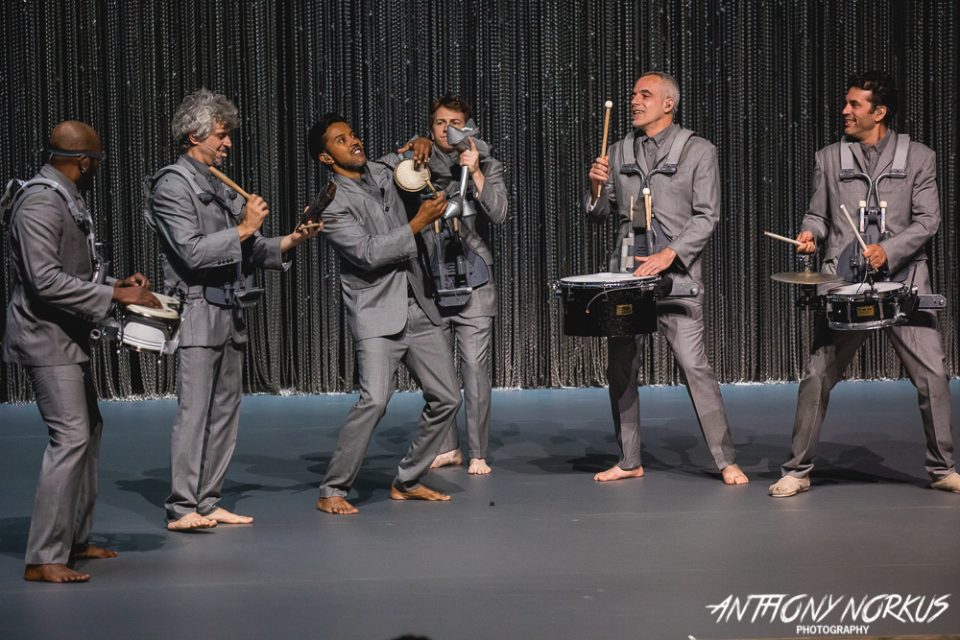
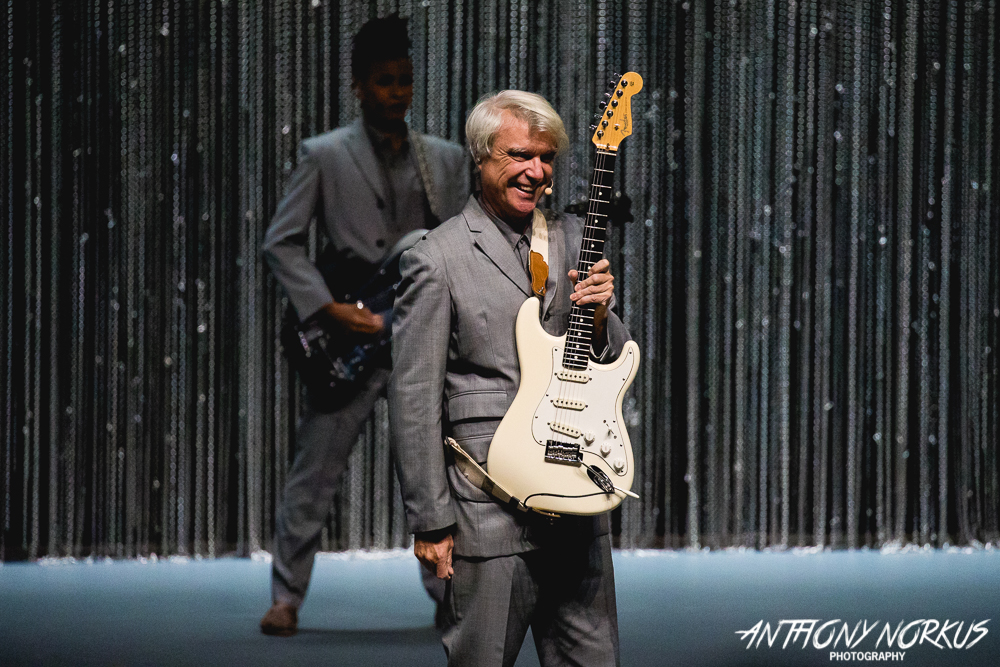
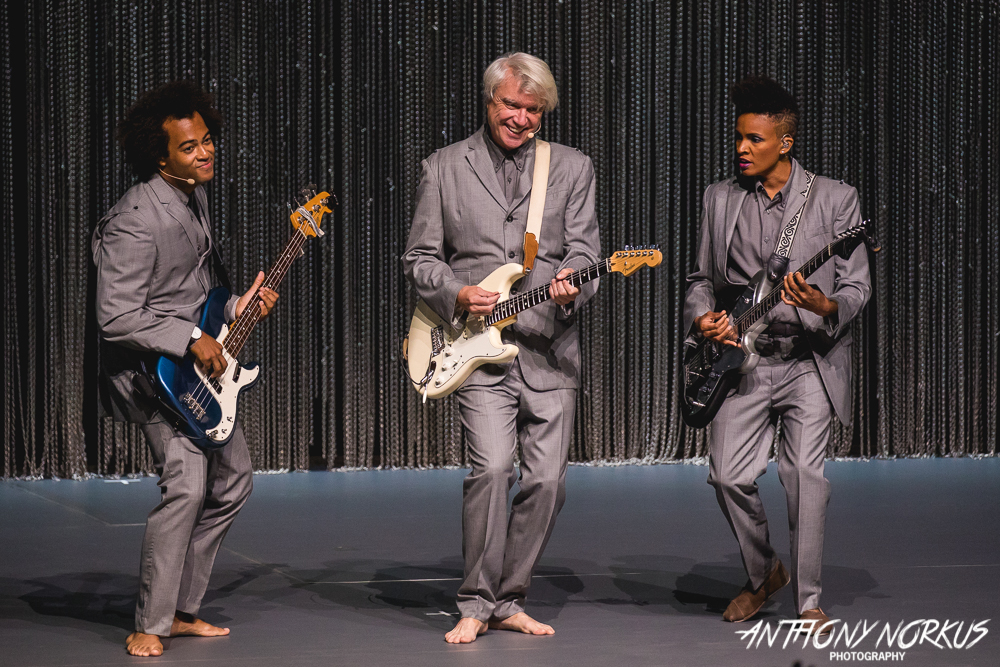
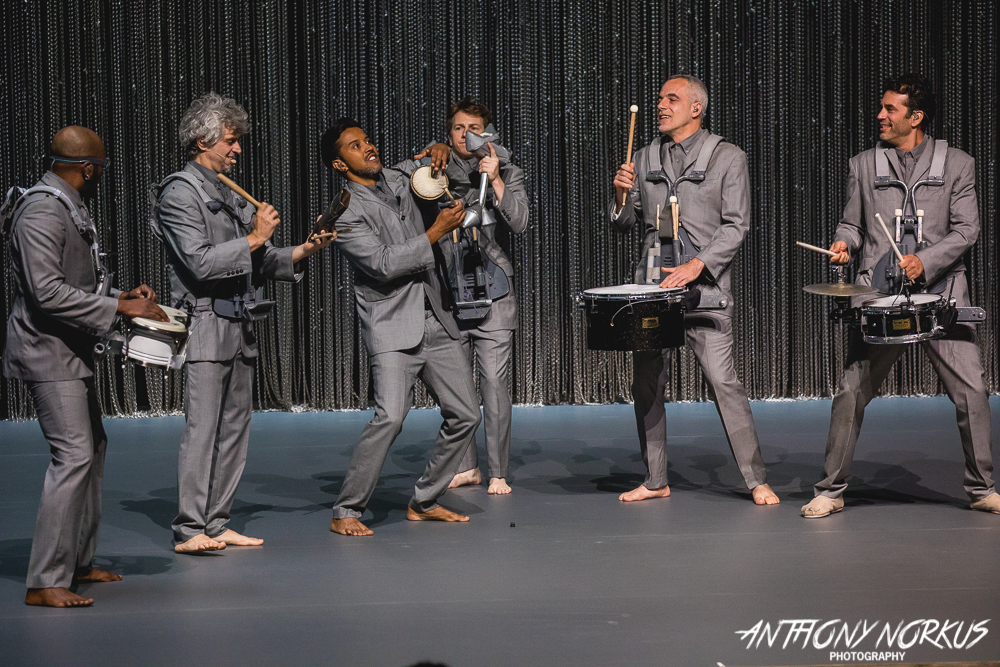
All Smiles: Byrne on stage with bandmates. (Photo/Anthony Norkus)
As Byrne explains, every piece of music we’ve ever heard only exists because it was written to fit into a preexisting form. Artists work backward, following trails rather than blazing them, creating music for venues and audiences that are already available, as necessitated by logistics, economics and technology. There has always been plenty of the passion and genius and madness we associate with creativity, but it’s the software and hardware that create the art, not the other way around.
Punk rock sounds the way it does because the lack of reverb in spaces like CBGB in New York City — where Byrne’s famous former band, The Talking Heads, first got heard — was ideal for immediacy and rawness, same with country bars in Nashville and elsewhere across America. Jazz sounds the way it does because people danced to it in small venues, and performers had to improvise to keep the audience moving and interested. European classical music evolved over a much longer span of time because the stone Gothic cathedrals where it was performed could not acoustically accommodate variations in key, tempo or harmony. African tribal drumming is humanity’s most durable musical tradition because it stayed outdoors, where it travels great distances, unconfined by architecture.
You maybe get the idea. When you’ve grown up loving and making and writing about music, putting it into categories, and obsessively ranking and judging and comparing everything you hear, it’s a profound brain-scrambling to realize that there’s no functional difference between what happens in a New Orleans jazz bar and, say, a dance club in Ibiza. Taste is irrelevant because everything makes perfect sense in context, and knowledge is irrelevant because you’ll never have it all; we’re just passengers on a continuum.
UNCONVENTIONAL APPROACH, UNFORGETTABLE EVENING
The second time David Byrne changed how I think about music was his appearance Wednesday night at DeVos Performance Hall, a stop on the mammoth “American Utopia” tour that has been generating ecstatic reviews for months. Promoting his excellent new album of the same name, Byrne presented an hour-and-45-minute show that wasn’t so much a rock concert as a reimagining of what’s possible in a conventional music venue in terms of production, movement and sound.
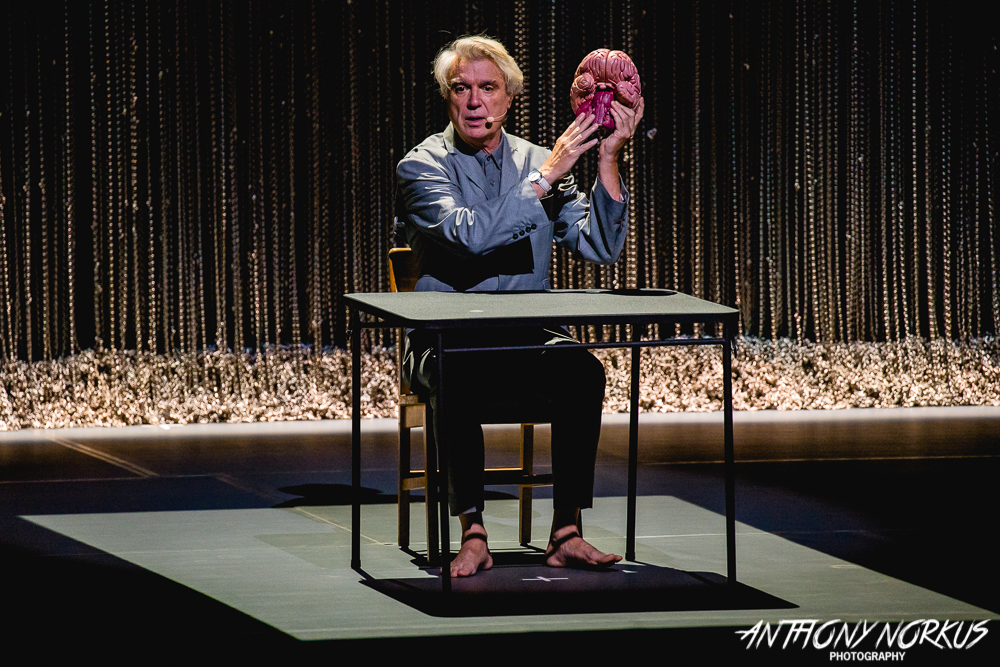
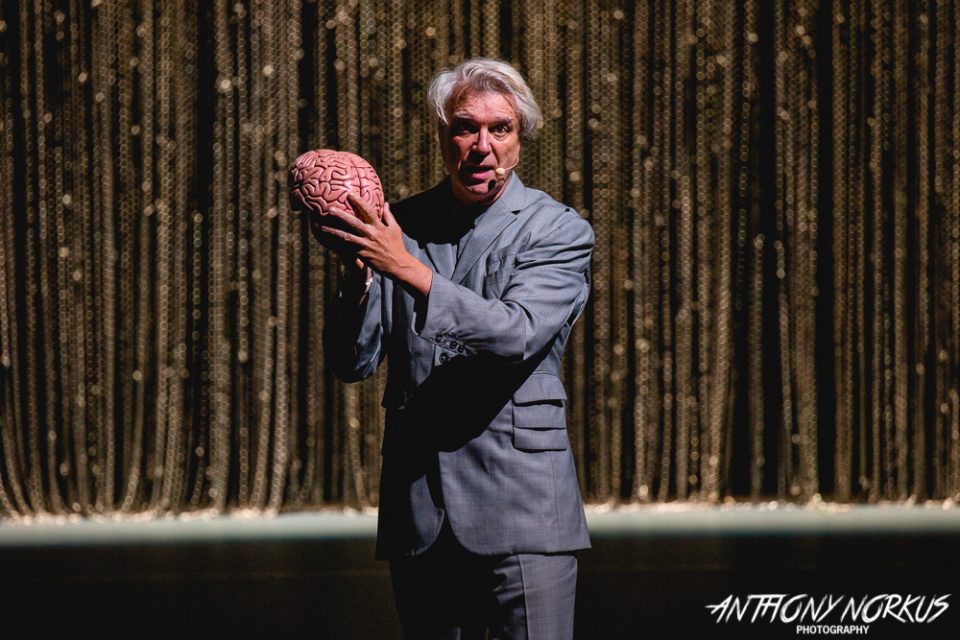
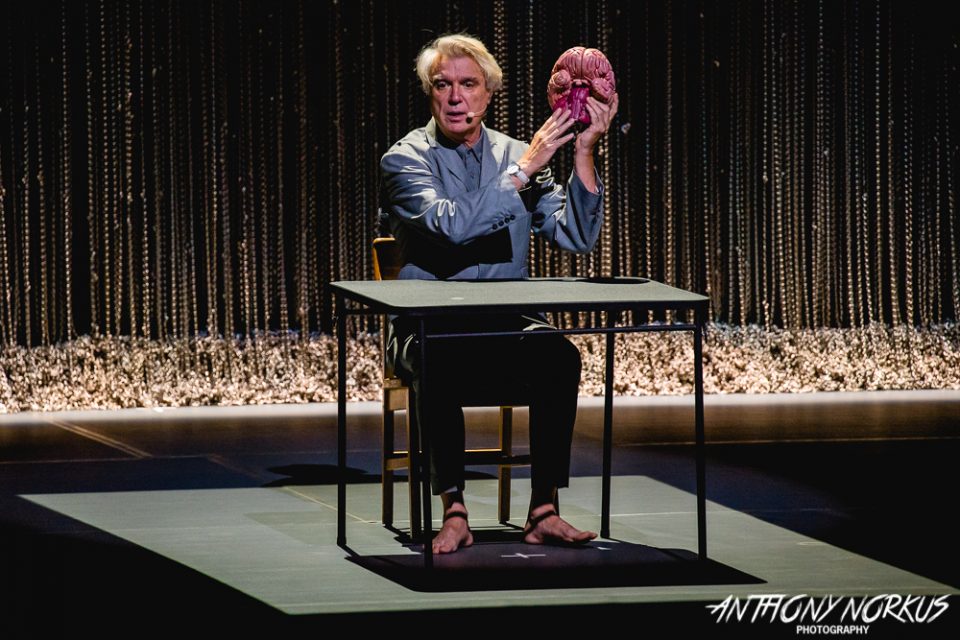
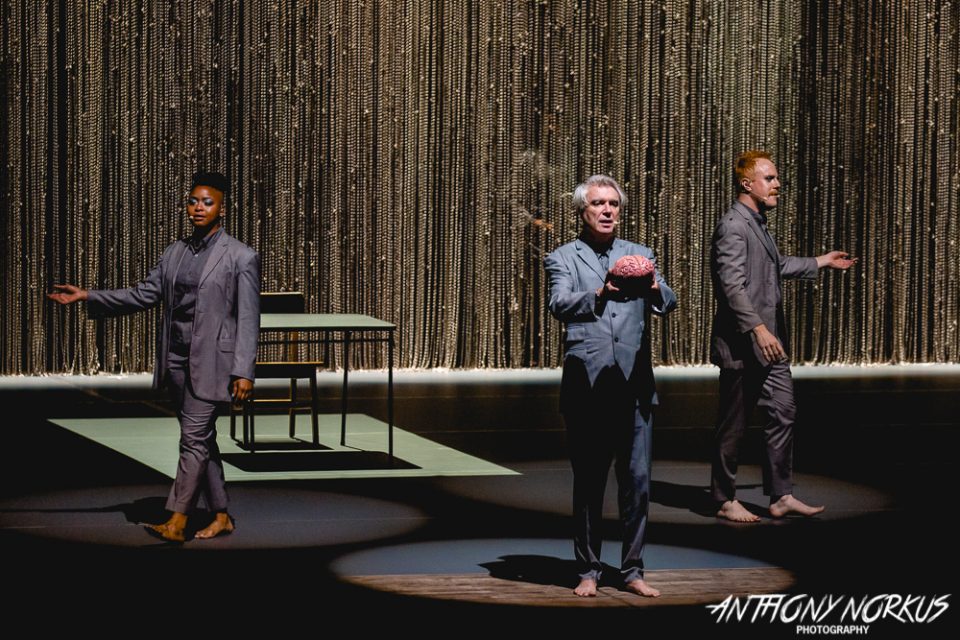
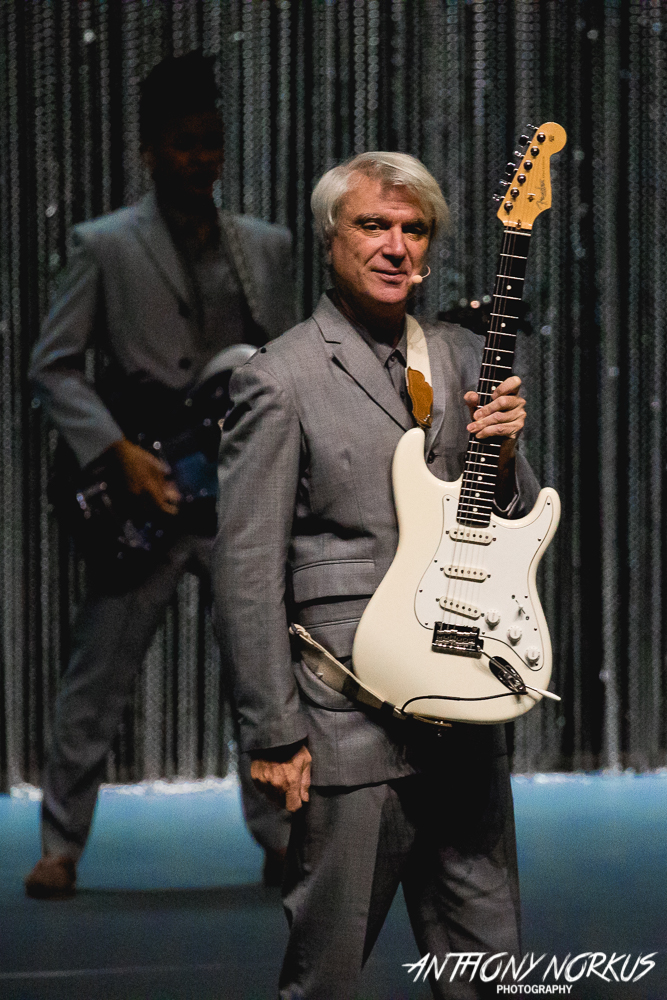
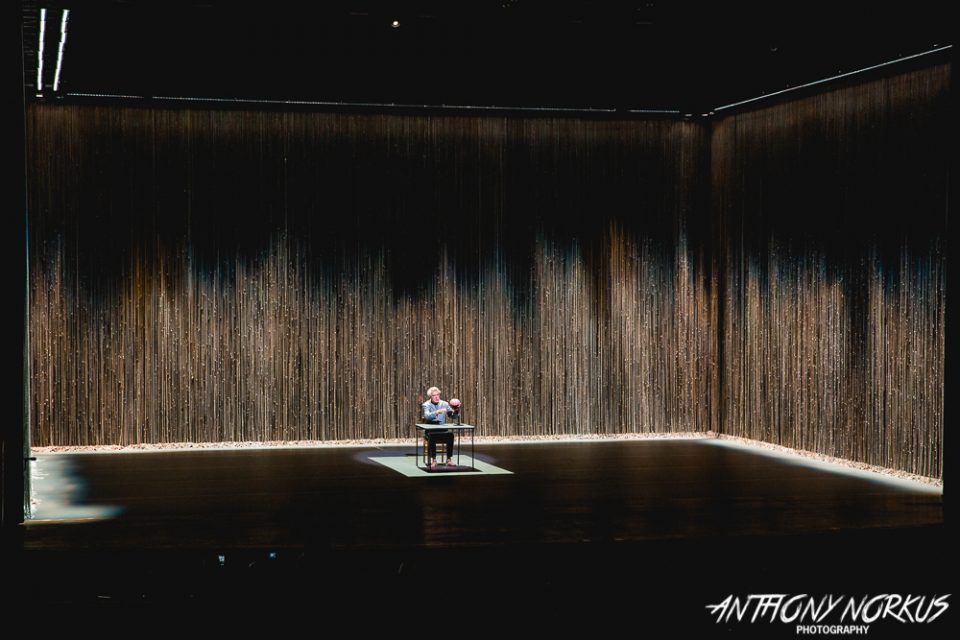
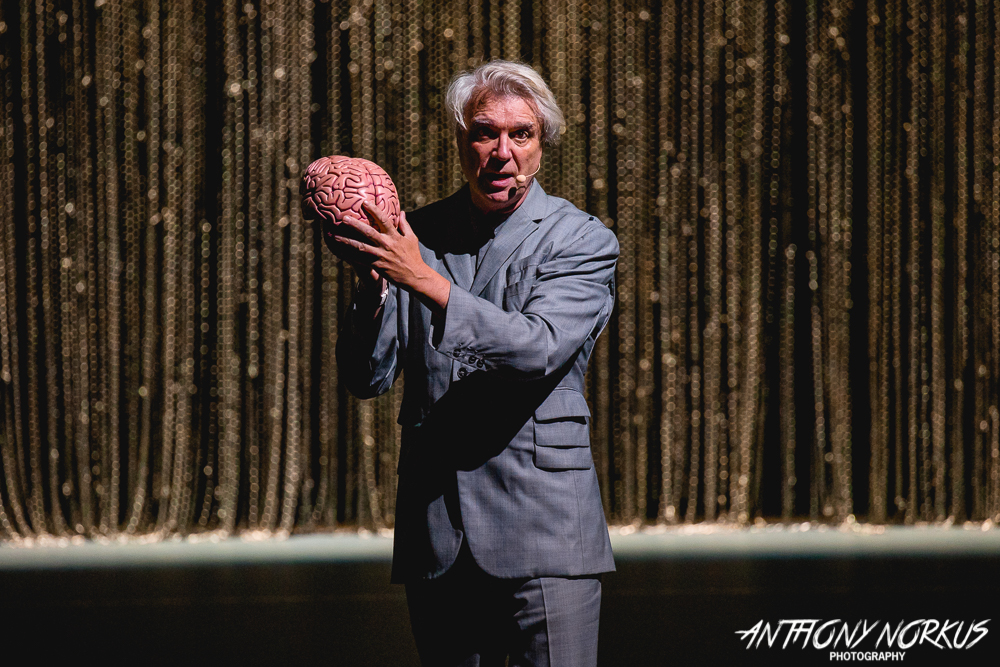
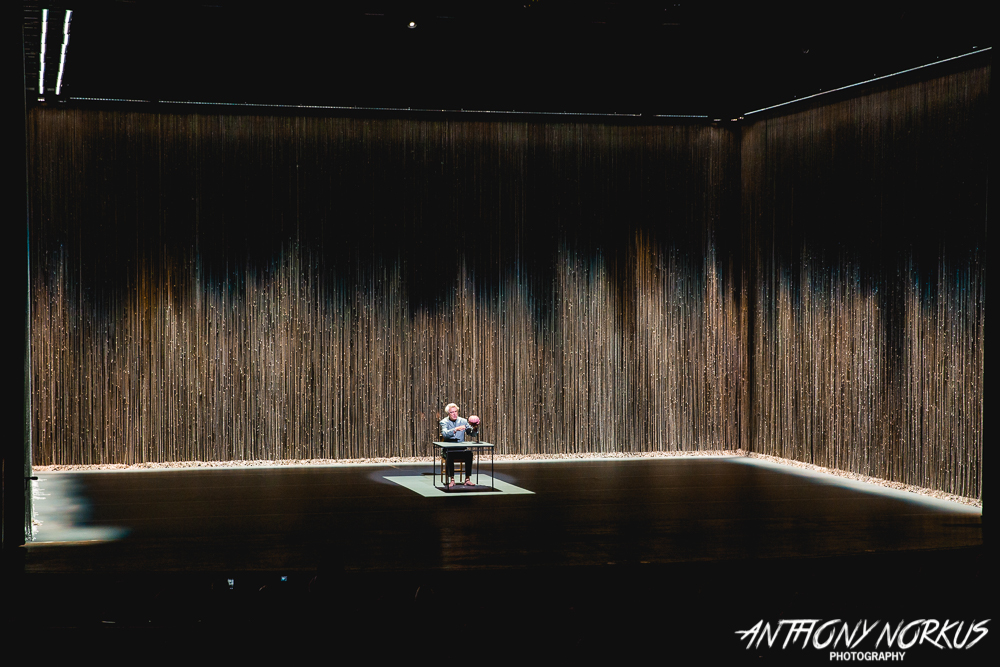
Brain Power: Byrne at the beginning of Wednesday’s concert. (Photo/Anthony Norkus)
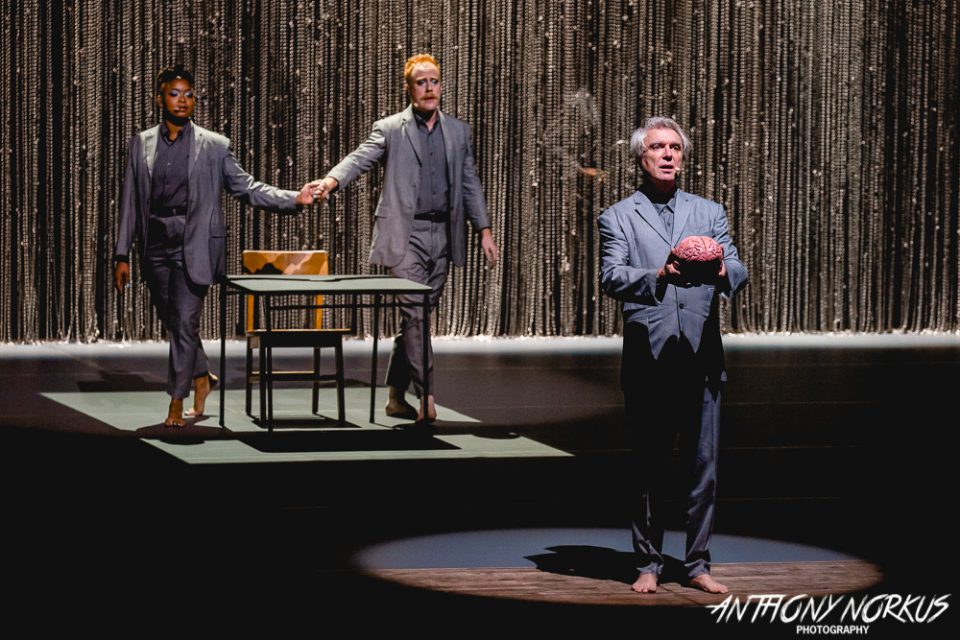
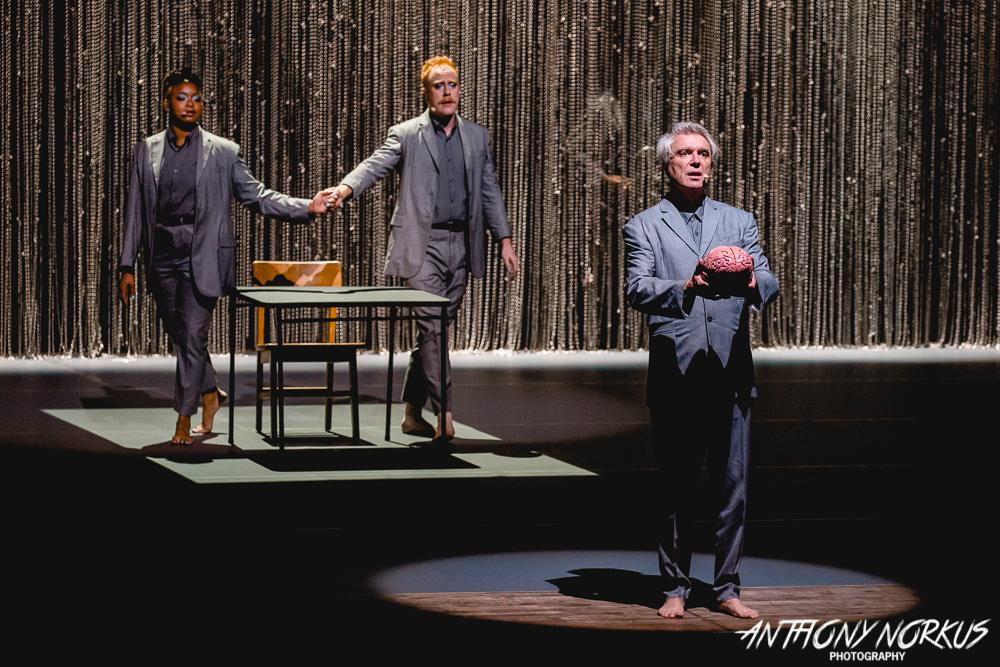
Byrne began the show seated alone in the middle of the stage, holding a replica of the human brain, as one does. While he sang “Here,” the closing track on “American Utopia,” a song literally about what happens in various parts of the mind, other performers slowly joined him, emerging through floor-to-ceiling curtains of what looked like metallic hippie beads. More likely they were meant to resemble the brain’s passages of synapses and neurotransmitters, unraveled and stretched to unknown distances, with the band performing metaphorically in some cleared-off corner of the mind.
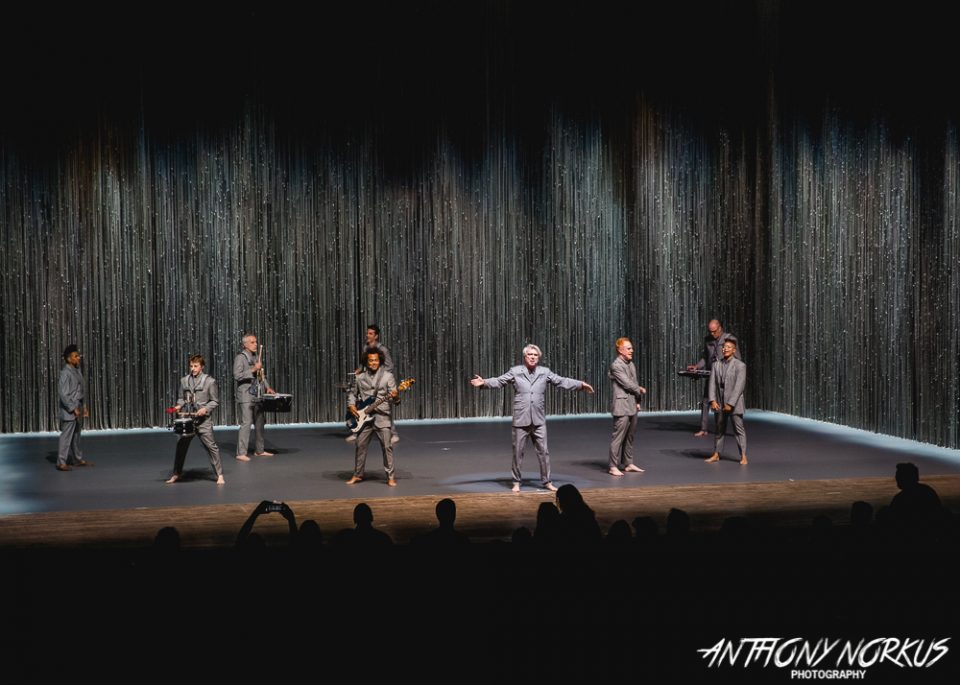
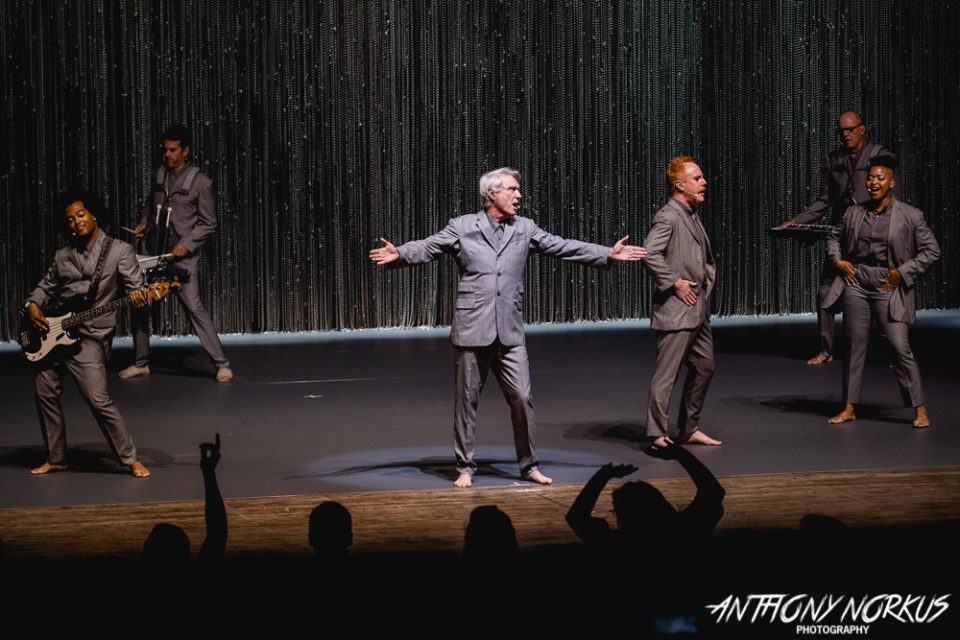
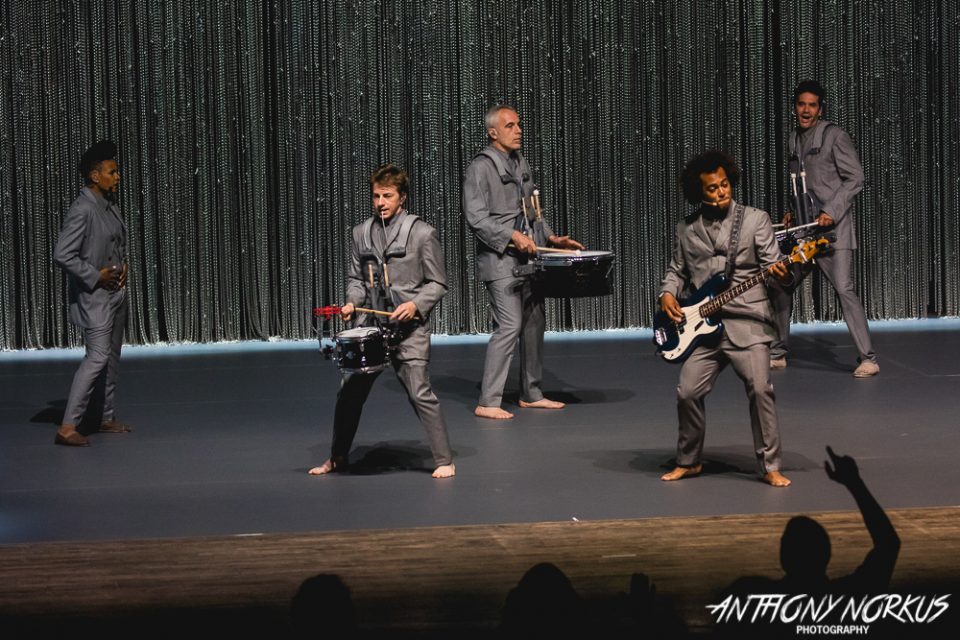
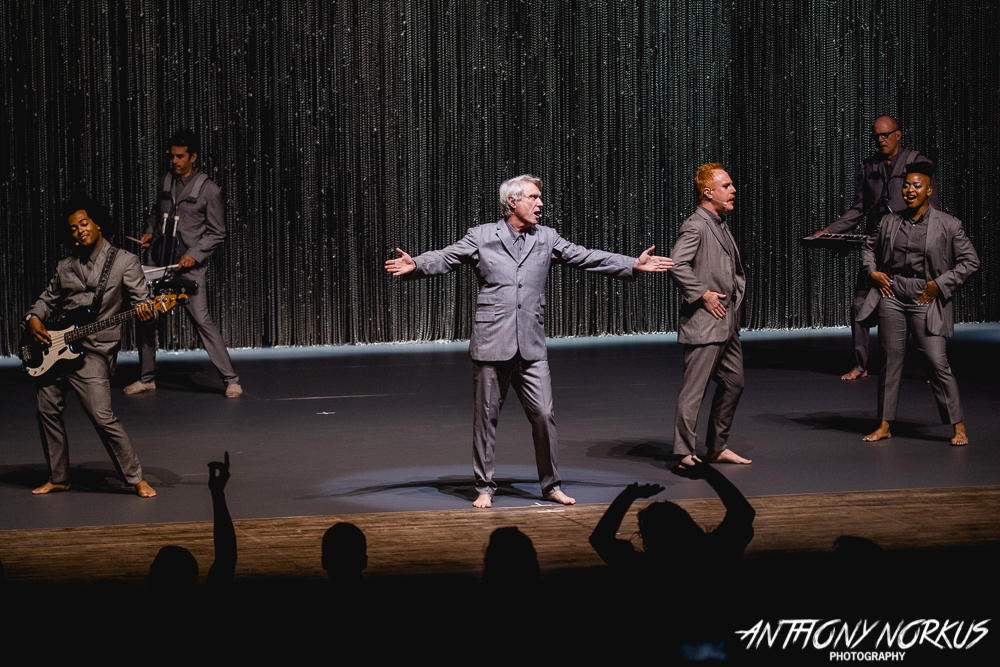
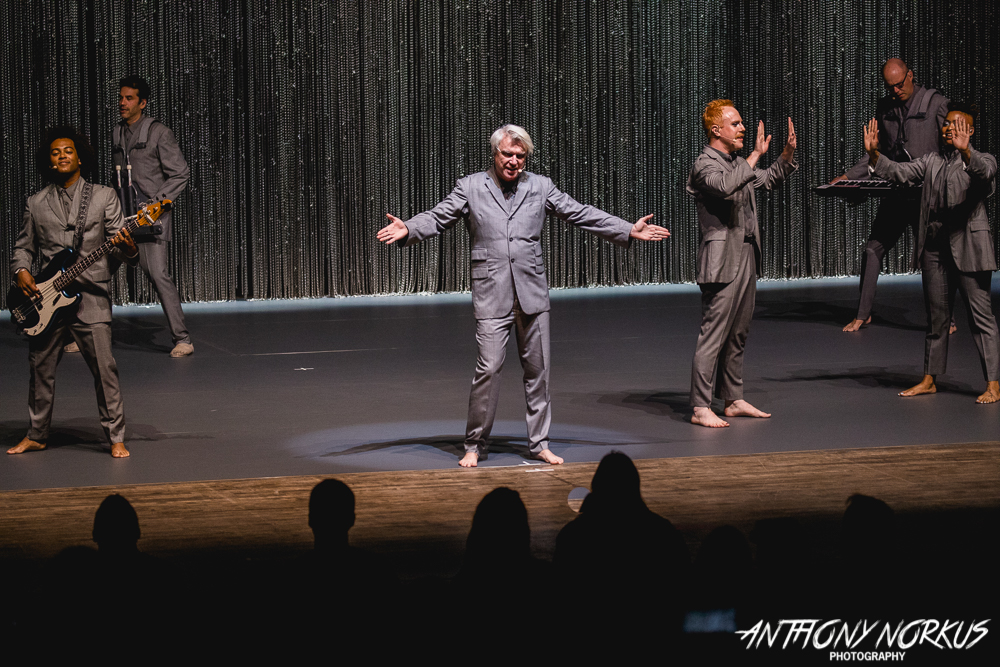
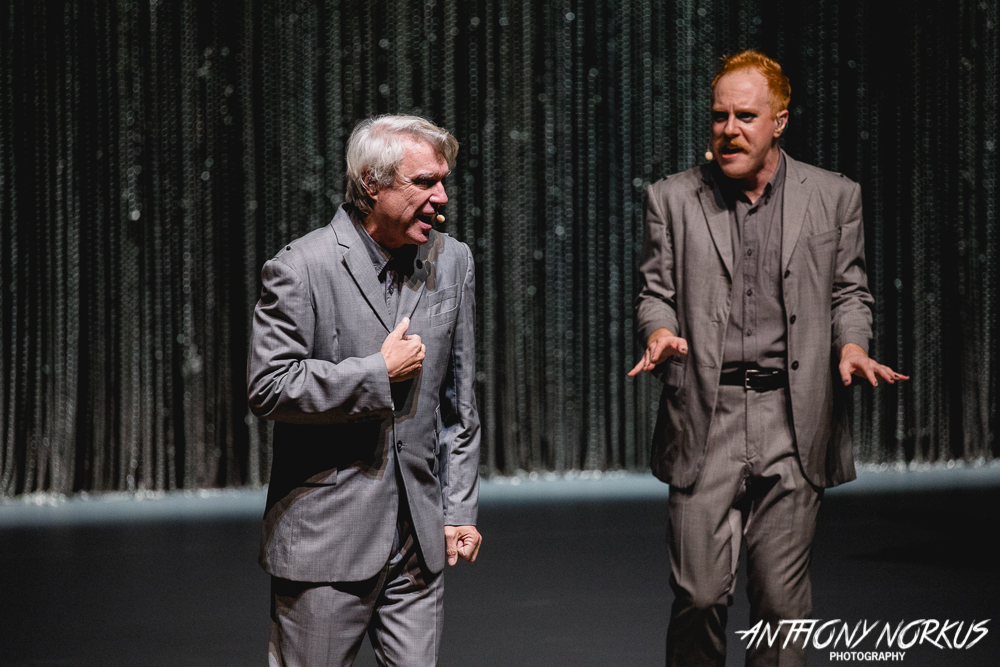
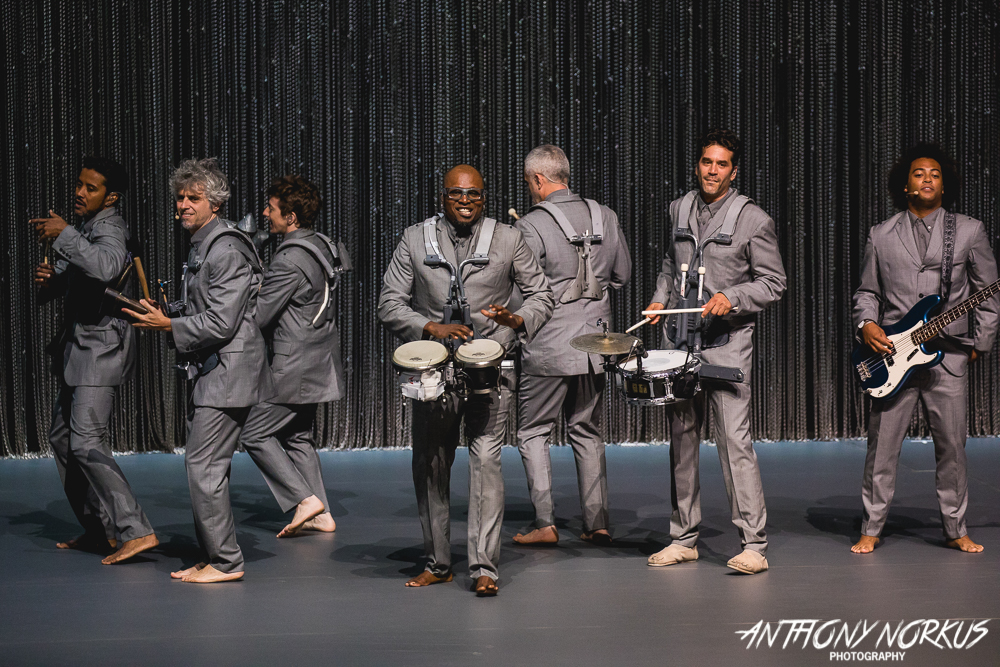
“Band” isn’t even the right word. Byrne was backed by about a dozen musicians, including a guitarist, bassist and keyboardist, plus an array of drummers and two vocalists/dancers. It took two more songs — “Lazy,” from Byrne’s “Grown Backwards” album, and “I Zimbra,” a Talking Heads standard — for the group to assemble into its full might.
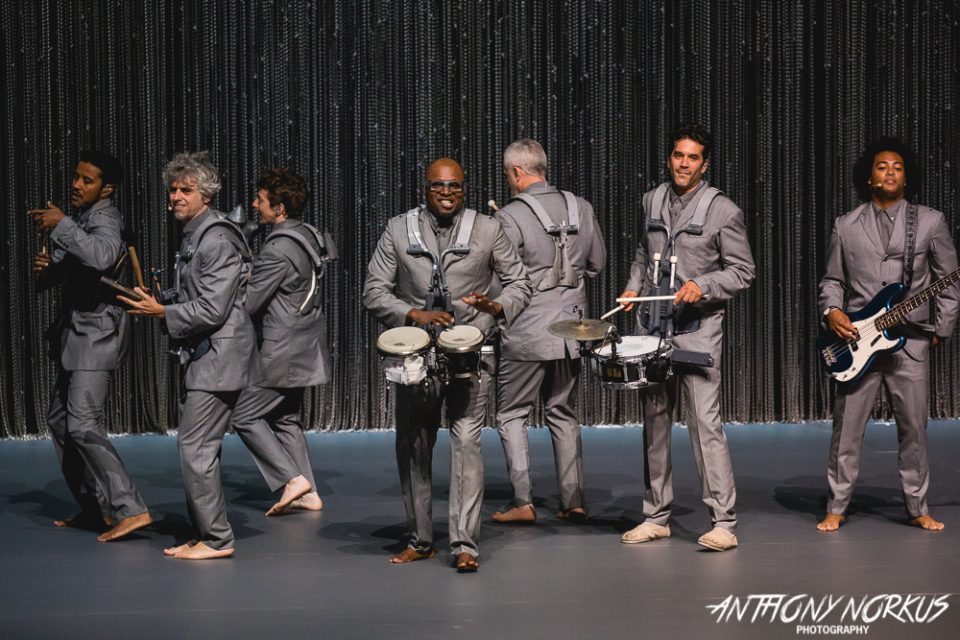
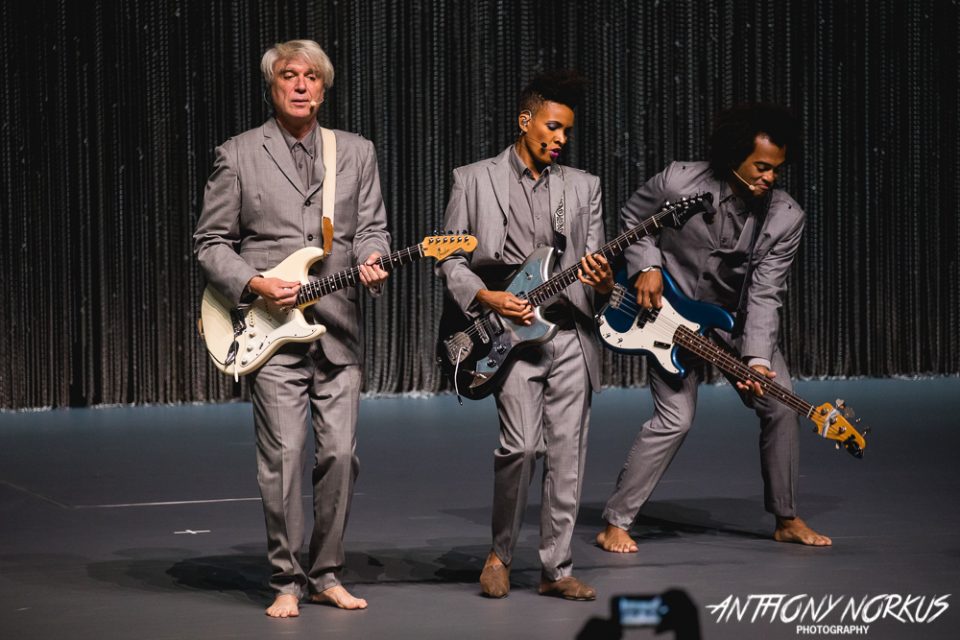
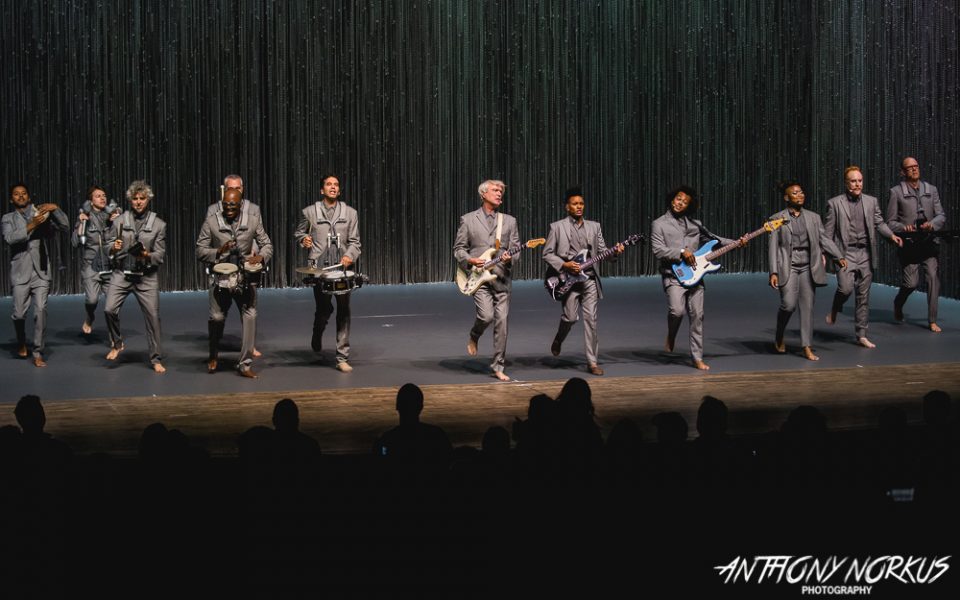
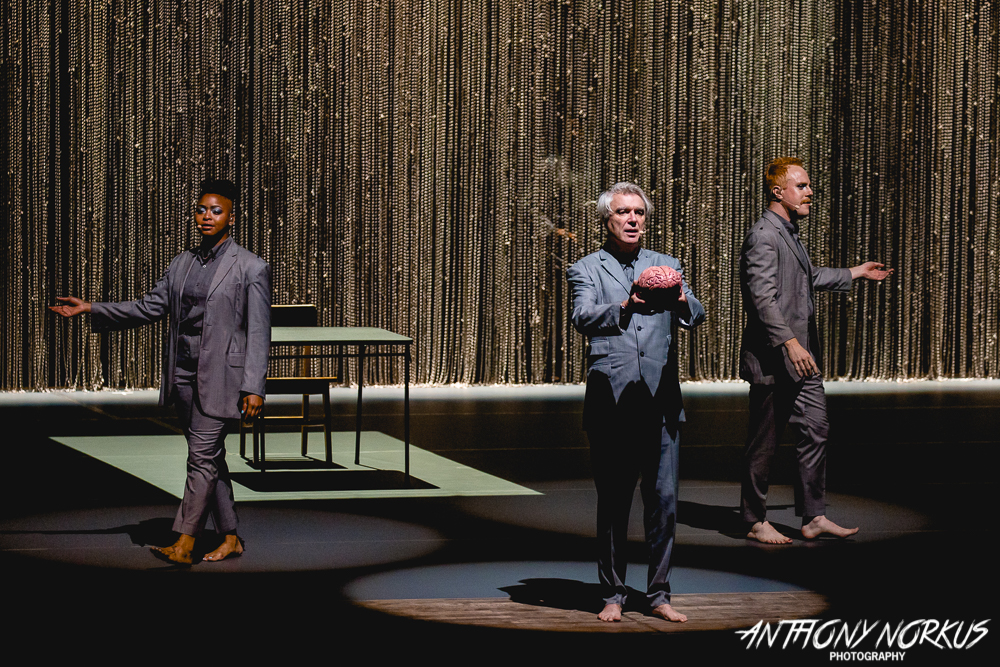
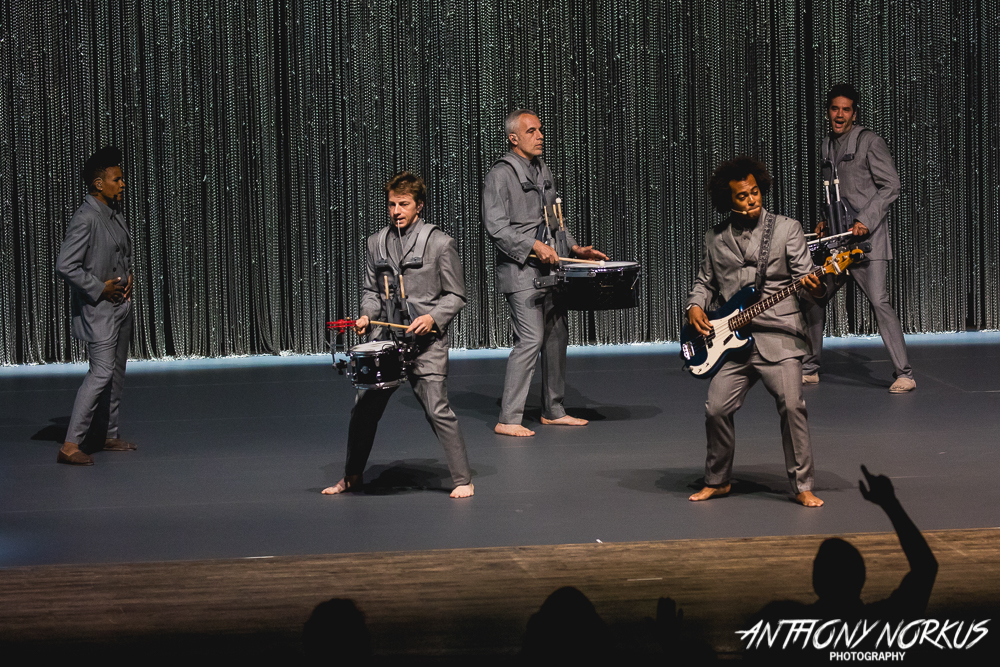
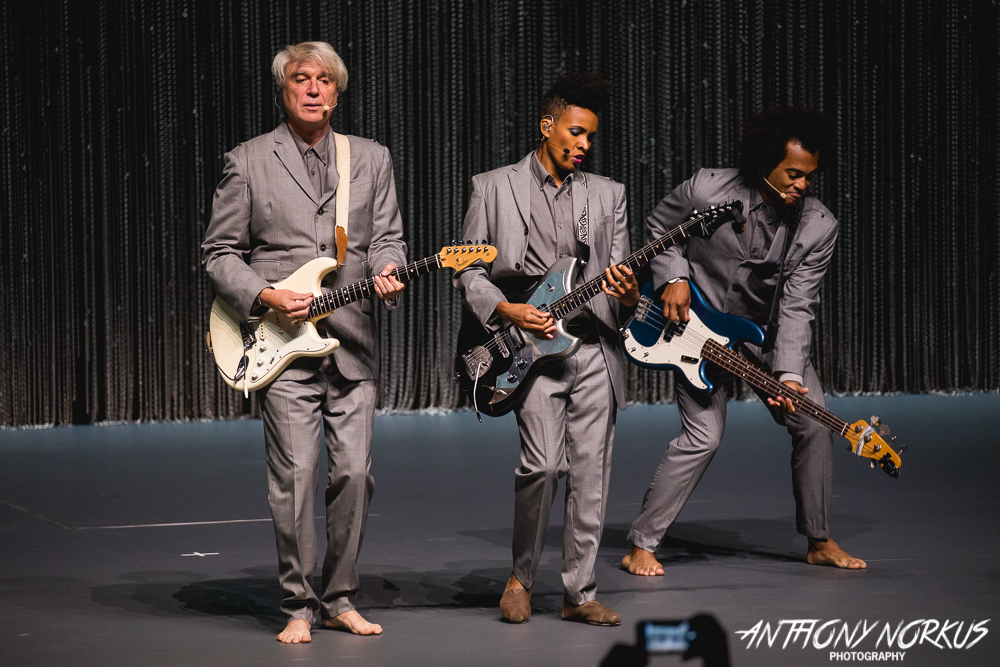
Crucially, no member was confined to a single spot onstage, and the communal percussion meant there was not a typical drum set around which to orient a stage plot. The group performed choreography of varying tightness, cohering at different times into a guerilla marching band, an avant-garde pit orchestra and an apocalyptic color guard ensemble.
The handful of Talking Heads classics — “This Must Be the Place (Naive Melody),” “Once In a Lifetime,” “Burning Down the House” — were magnificent as ever but inseparable from the larger agenda that included just as many “American Utopia” cuts, such as the propulsive “Everybody’s Coming to My House,” the post-industrial dreamscape of “I Dance Like This” and the achingly affirmative “Every Day Is a Miracle.”
SOUNDING ‘SAME AS HE EVER WAS,’ PROBABLY BETTER
But that agenda involved confrontation as much as affirmation. The final encore was a cover of the recent Janelle Monae song “Hell You Talmbout,” in which members of the group took turns, over an insistent drum beat, yelling the names of people of color killed by police — a brave finale in any context, even more so here, less than a block from where Vice President Mike Pence had been speaking at a rally earlier that night.
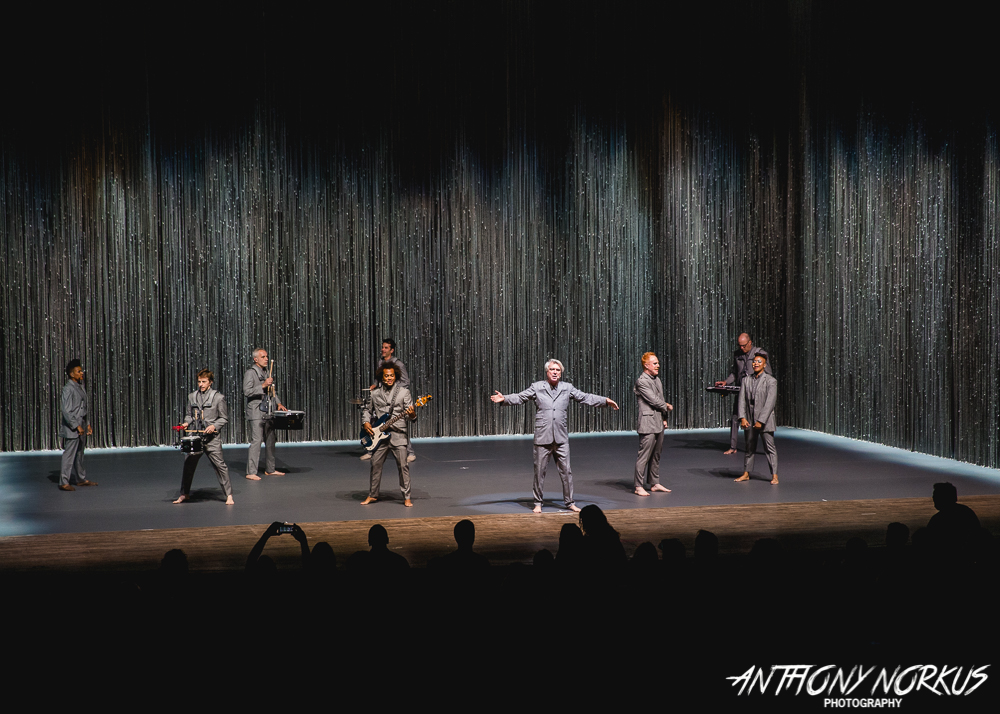
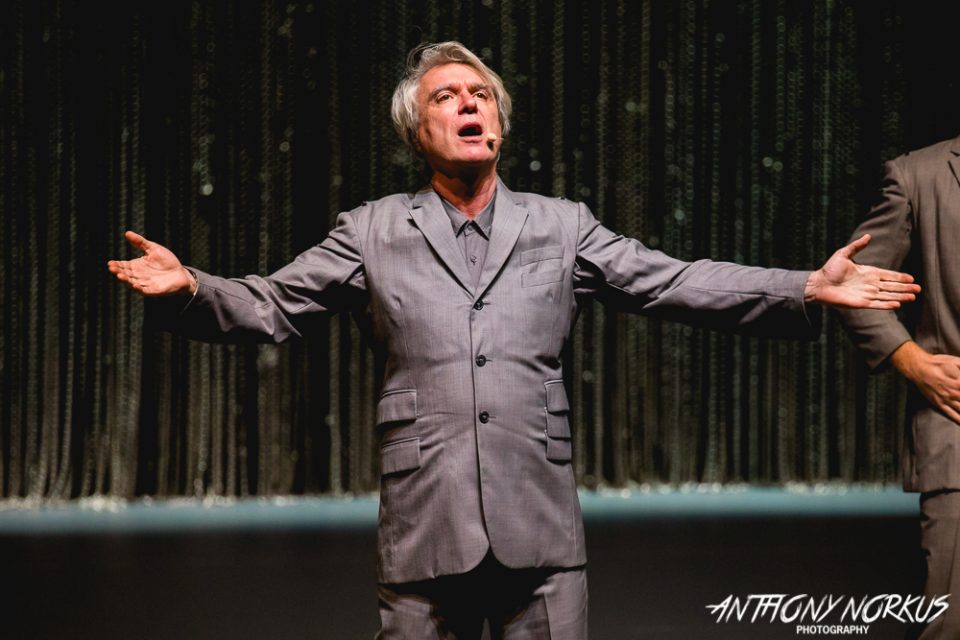
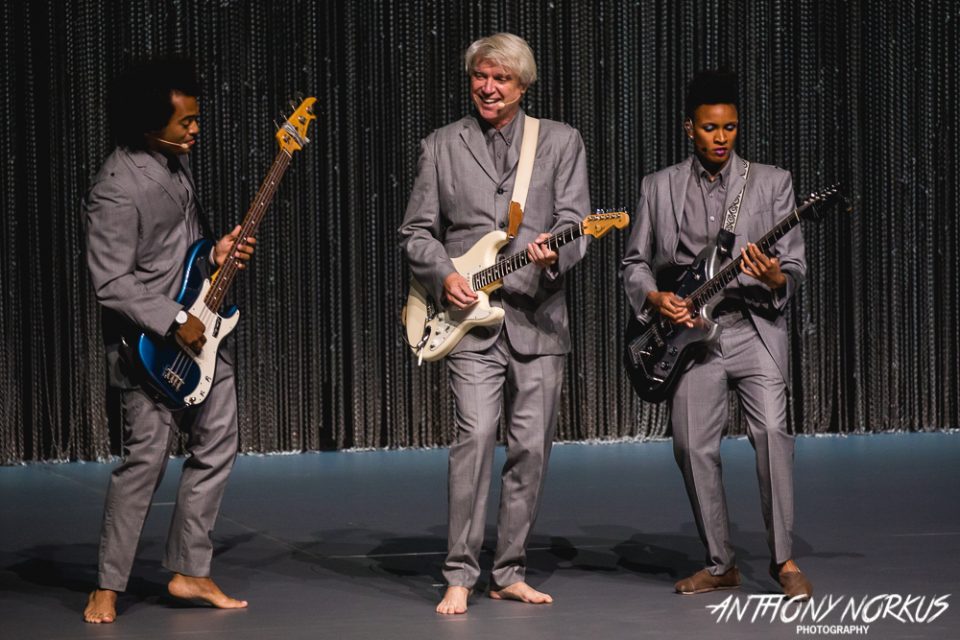
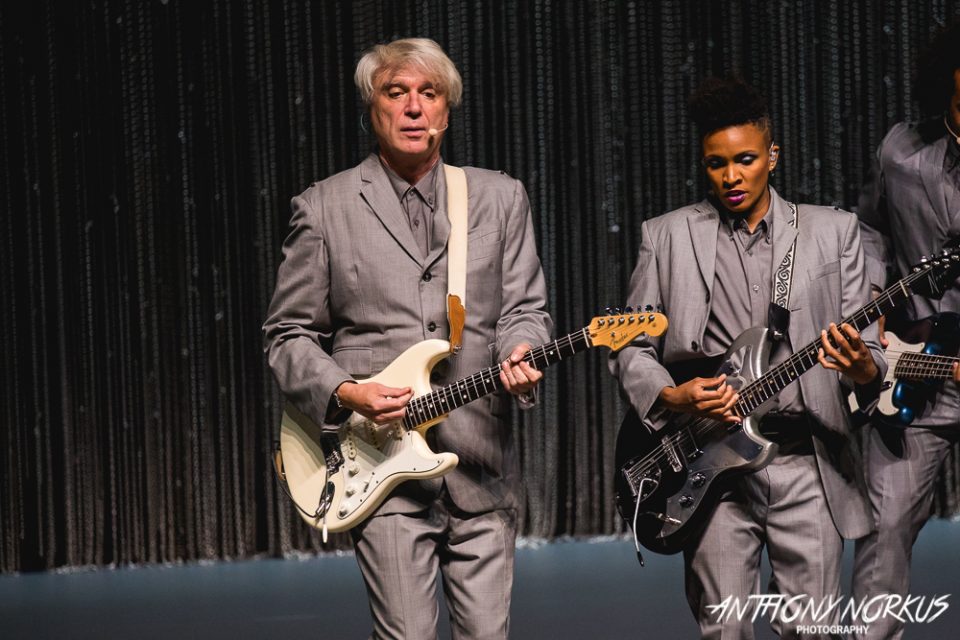
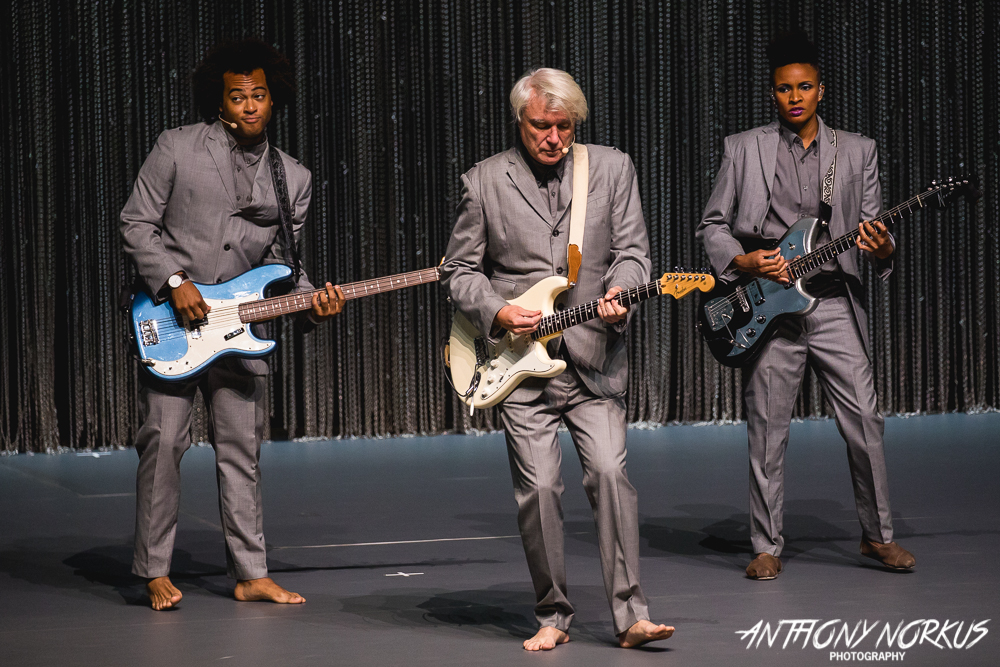
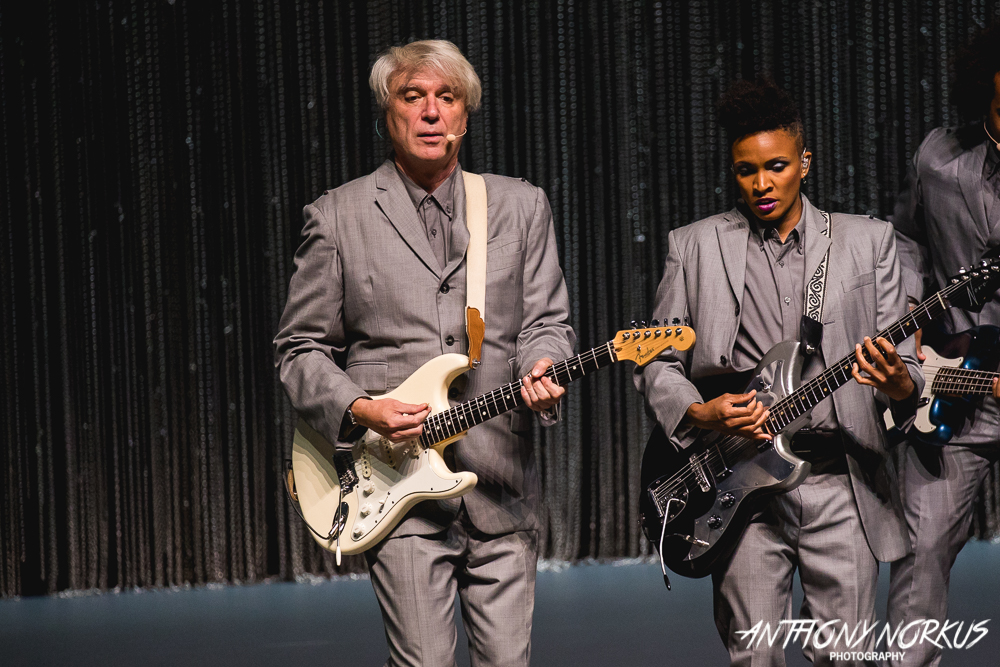
Groundbreaking Production: Byrne’s show pushed the boundaries of a concert experience. (Photo/Anthony Norkus)
Playing the legacy-artist game of measuring how a performer is holding up in age while charting the classics/obscurities/new-stuff ratio against the ideal set list in your head is so far beside the point in Byrne’s case that I feel silly even mentioning it. But yes, he sounded very, very good, same as he ever was, probably better.
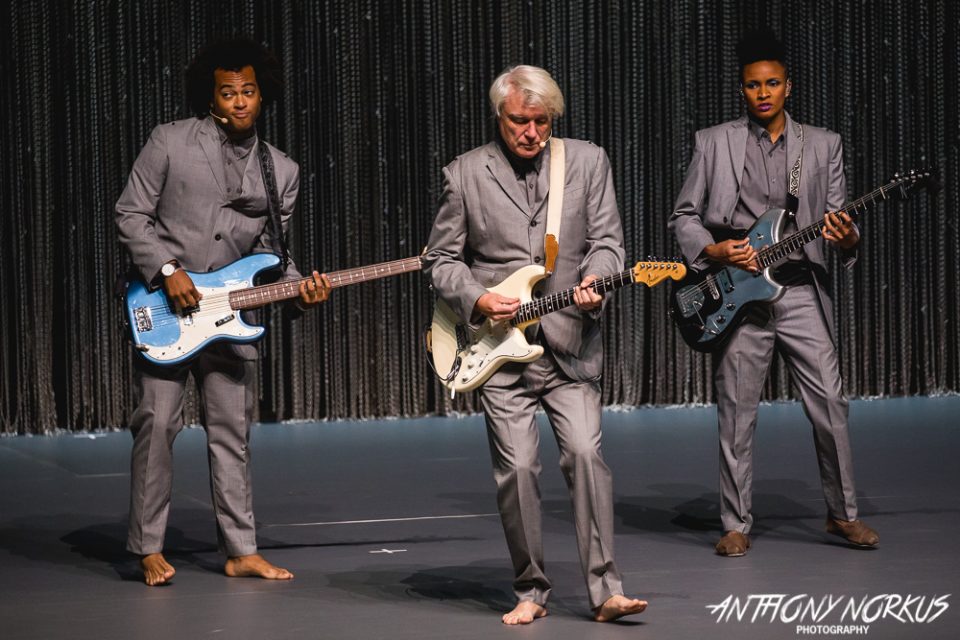
It’s impossible to reflect on the “American Utopia” show, however, outside the precedent Byrne set with “Stop Making Sense,” the classic Talking Heads concert film from 1984. Not only was the stage full of people in gray suits (well-fitting this time), but it seemed Byrne had neared a realization of the idea he’d first presented in that film, or at least a more fleshed-out version of it.
The Talking Heads were a deconstruction of the rock band archetype that happened to also be a world-class rock band. When Byrne began the film by playing “Psycho Killer” alone to a backing tape as the band pieced itself together behind him, he was playing with the conceptual relationships of audience to artist, bandleader to band and artifice to authenticity in ways that are only now starting to make sense.
You may ask yourself what all these things mean, and Byrne is still here to tell you: everything and nothing at the same time. It’s all a continuum.
RE-IGNITING THE ETHEREAL MAGIC OF A CONCERT EXPERIENCE
I’ve never saved ticket stubs or bothered posting terrible iPhone photos from concerts, so my life of shows is a collection of flickering memories, going all the way back to when my friends and I would lie to our parents to get rides to sketchy armory halls where we’d see touring hardcore bands who were amused that middle-school kids wanted their autographs on cassettes. I got kicked in the head by a crowd surfer at the famous Verve Pipe show on the old Monroe Mall amphitheater in the mid-90s. I have seen Pearl Jam perform “Alive,” “Yellow Ledbetter” and “Corduroy” about 20 times apiece. I have watched washed-up country artists collect paychecks at destitute county fairs.
I saw Metallica perform a surprise set at a tiny side stage at a misbegotten festival on Belle Isle that caused them, financially speaking, to lose their asses. I have touched Bruce Springsteen’s hand, and Nick Cave’s. I can still feel the first My Bloody Valentine reunion tour in my sternum. I saw the reconstituted Pixies play to a worshipful crowd when it was still interesting for a respected band to reunite for the love (i.e., $$$$$) they were denied in their prime. I was in the audience the first time Radiohead played “All I Need,” back before the internet made everything unspecial.
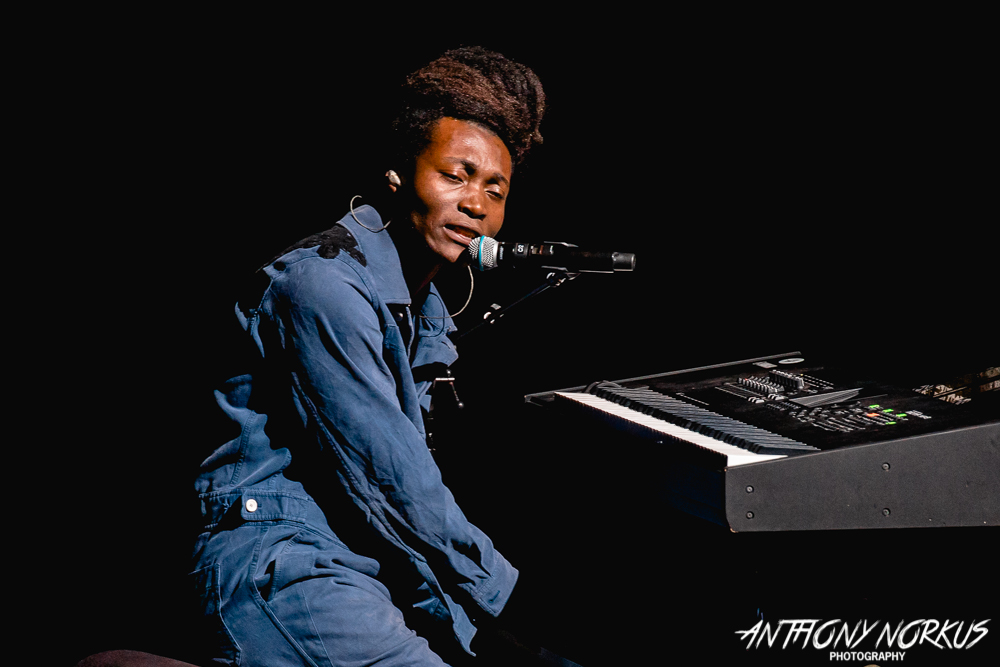
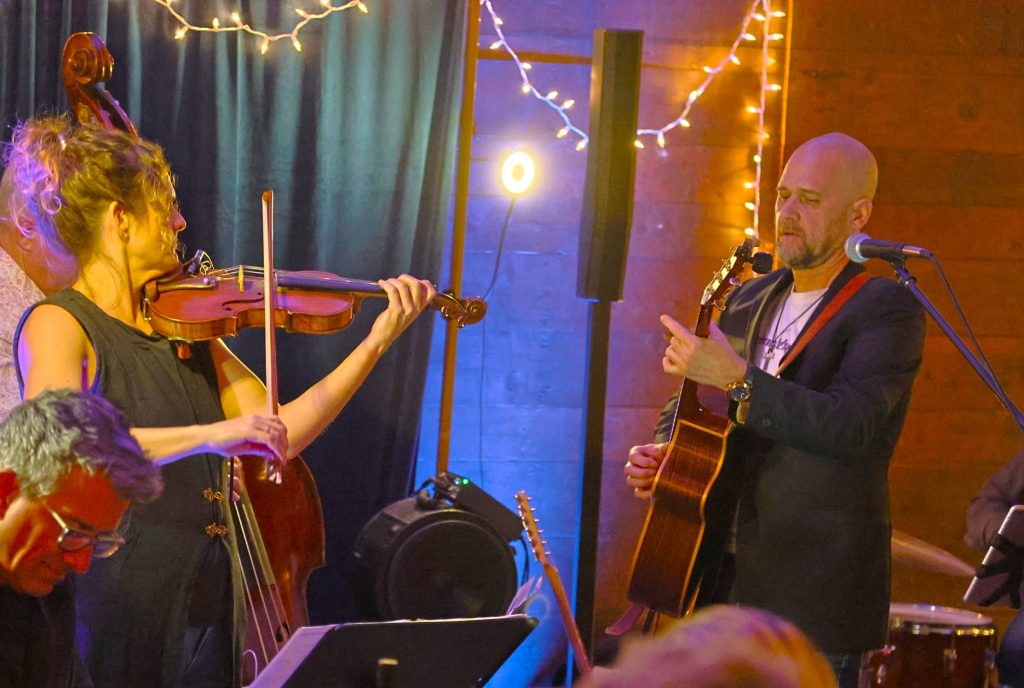
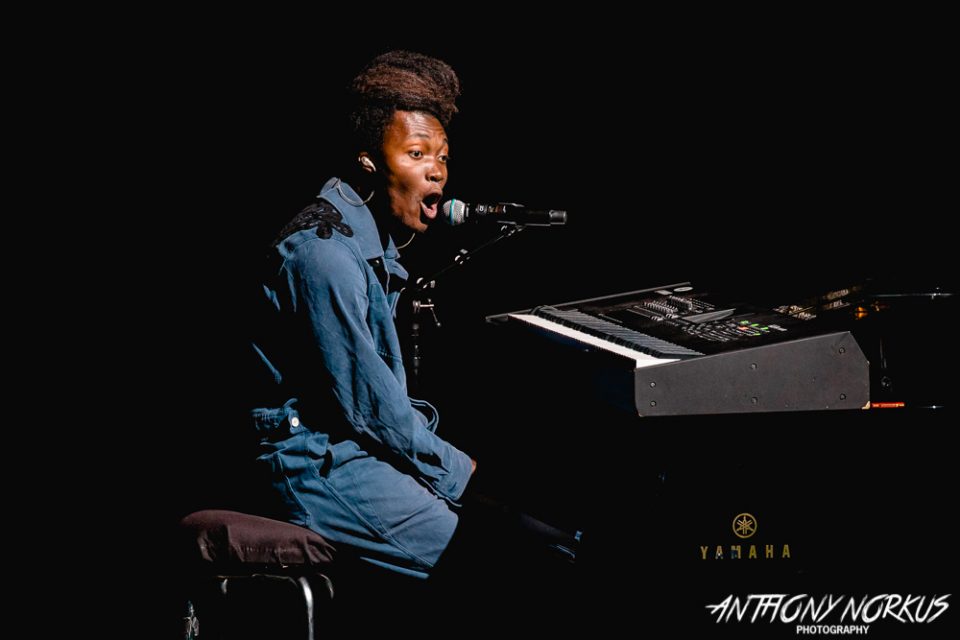
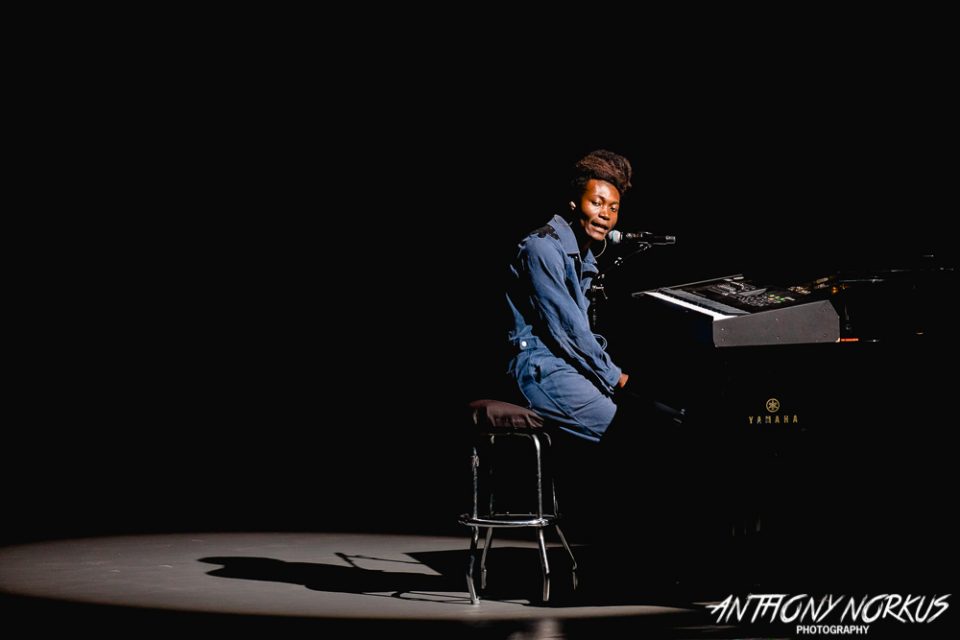
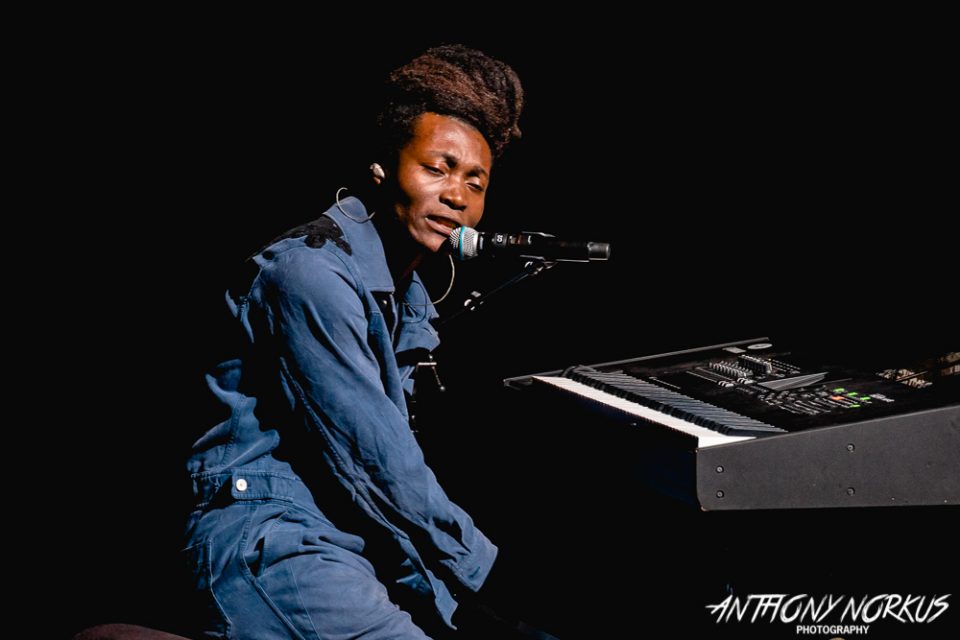
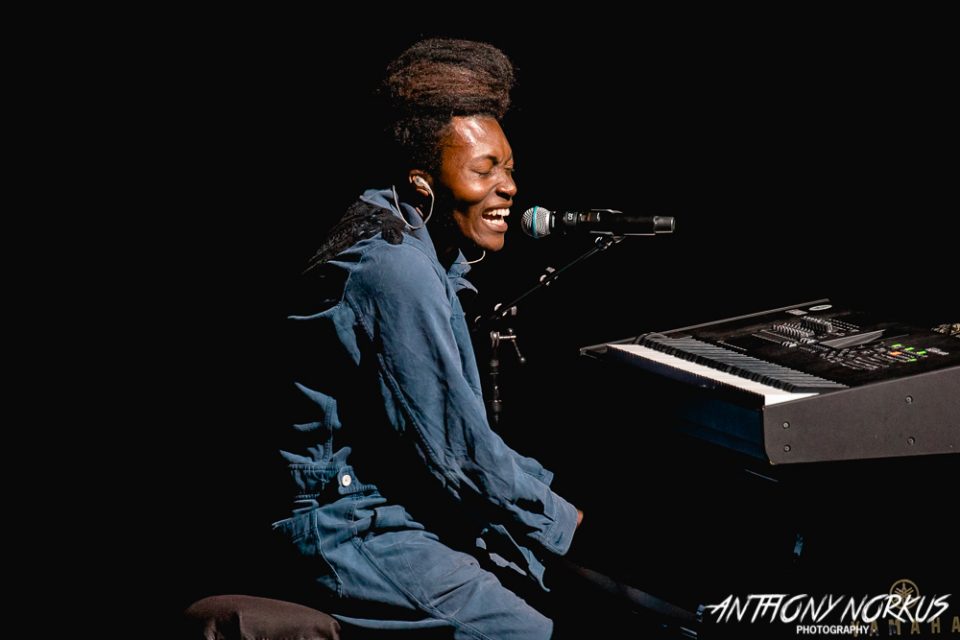
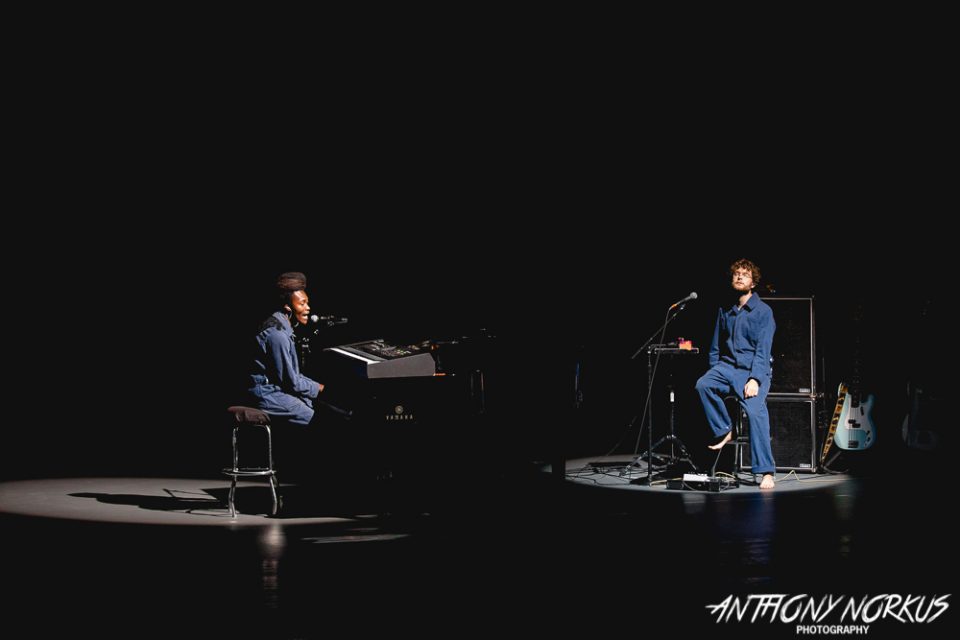
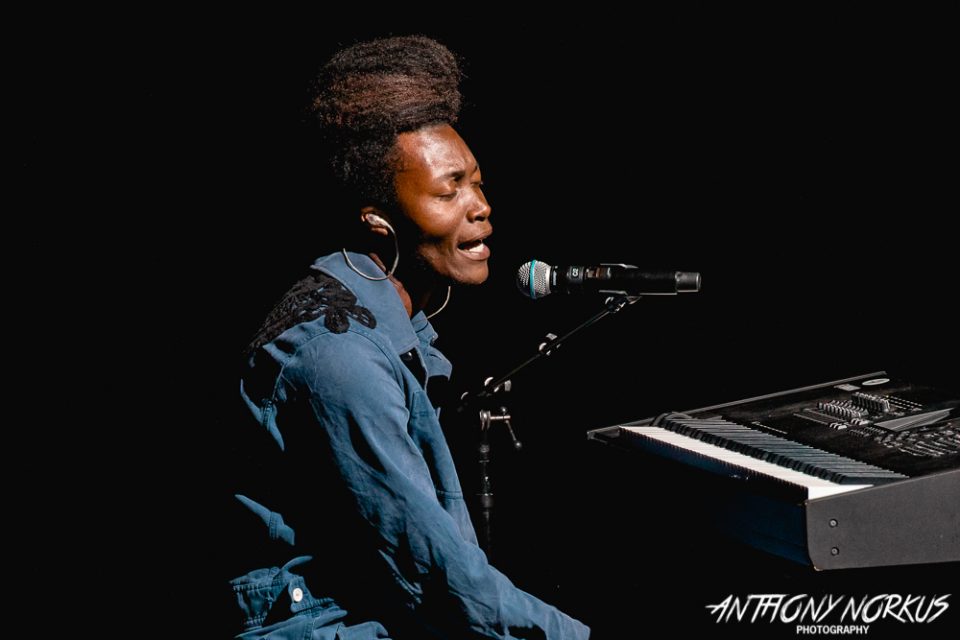
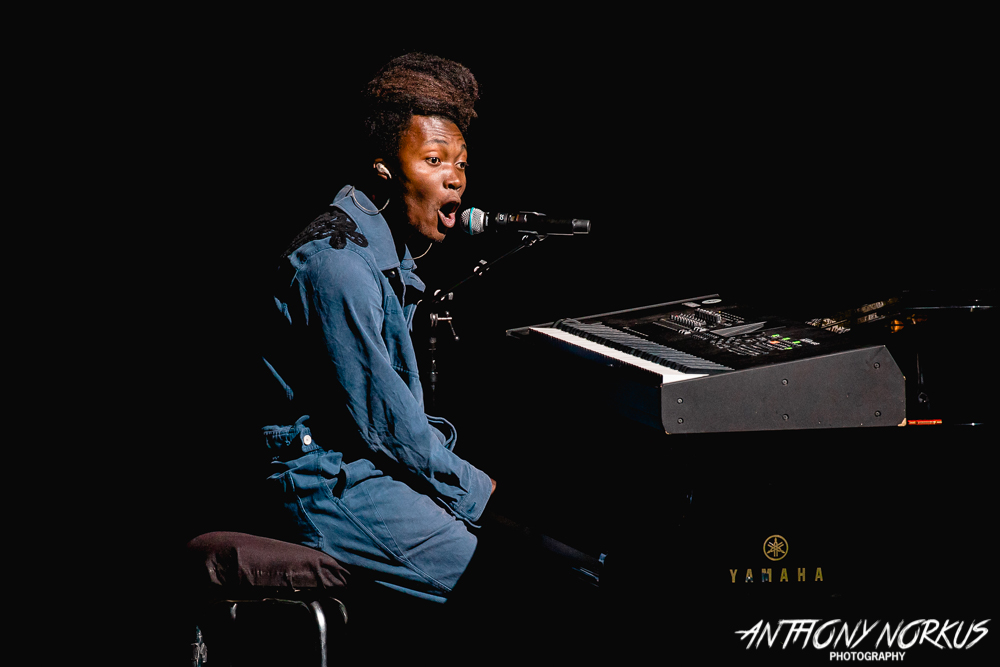
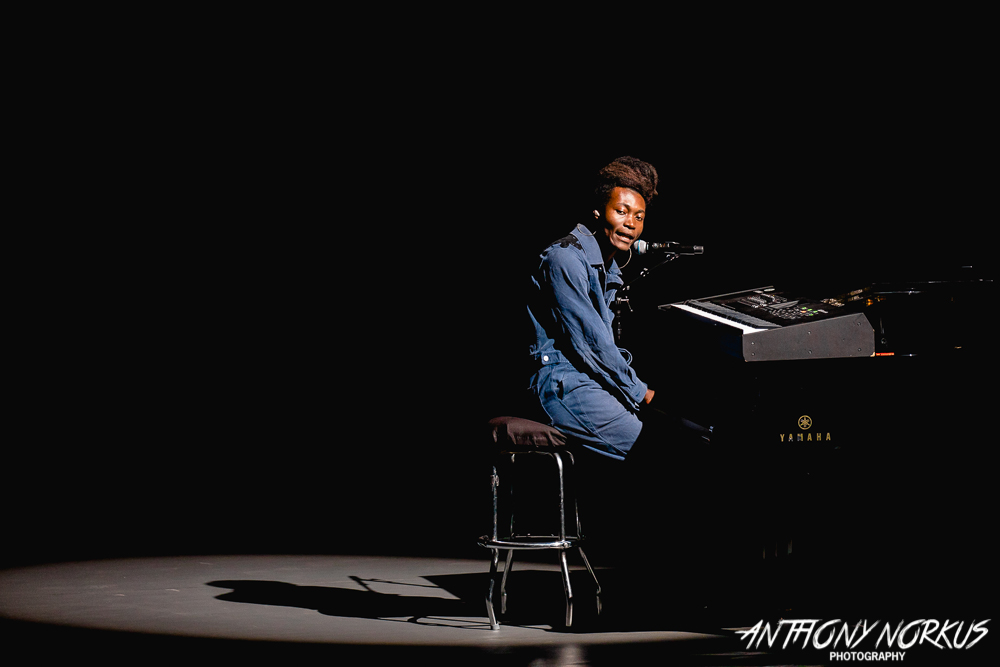
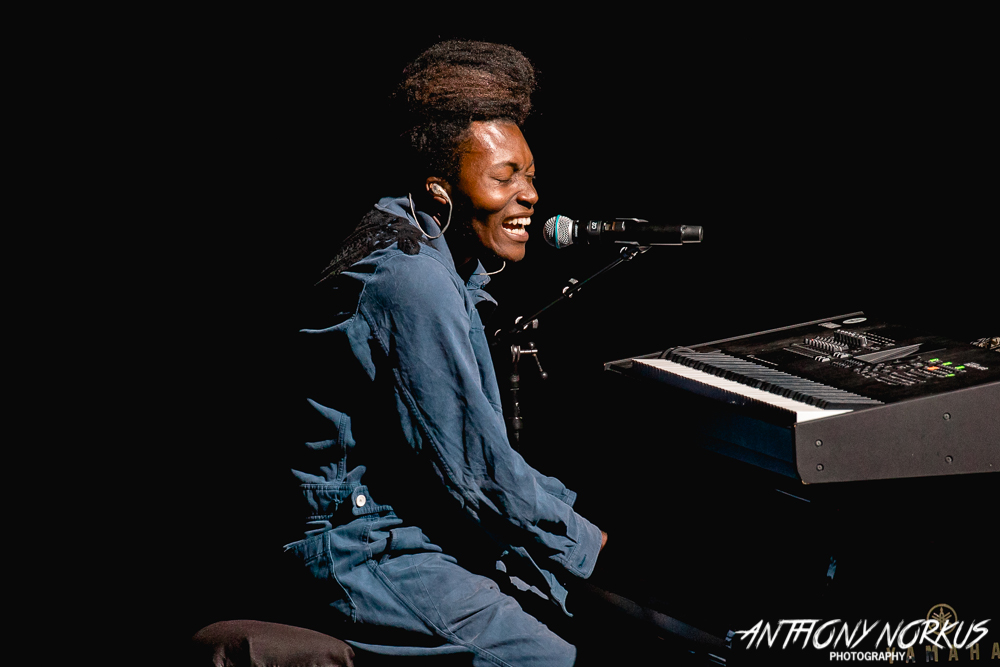
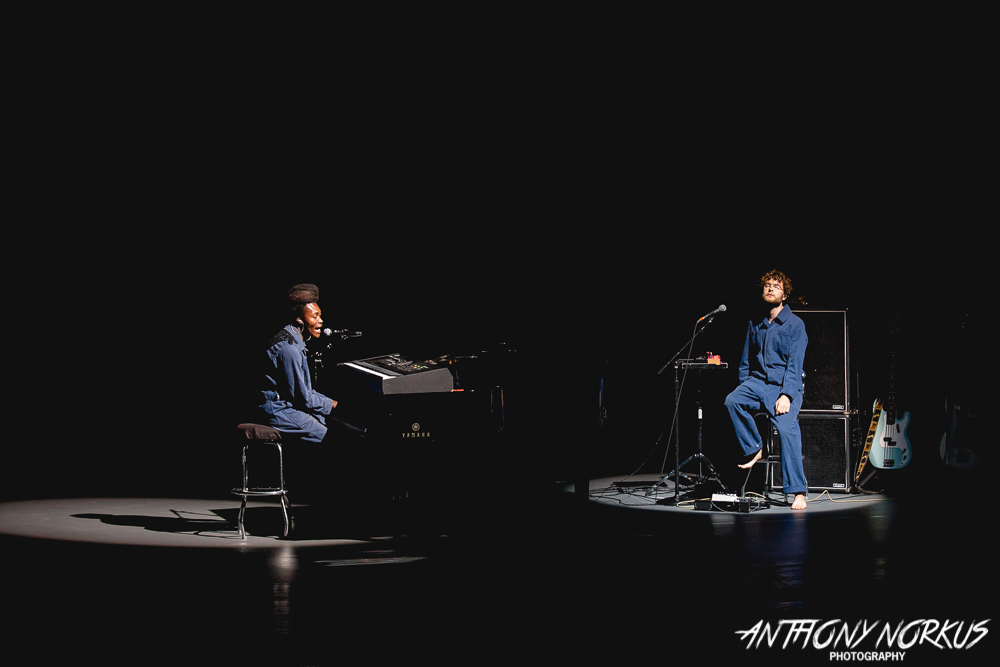
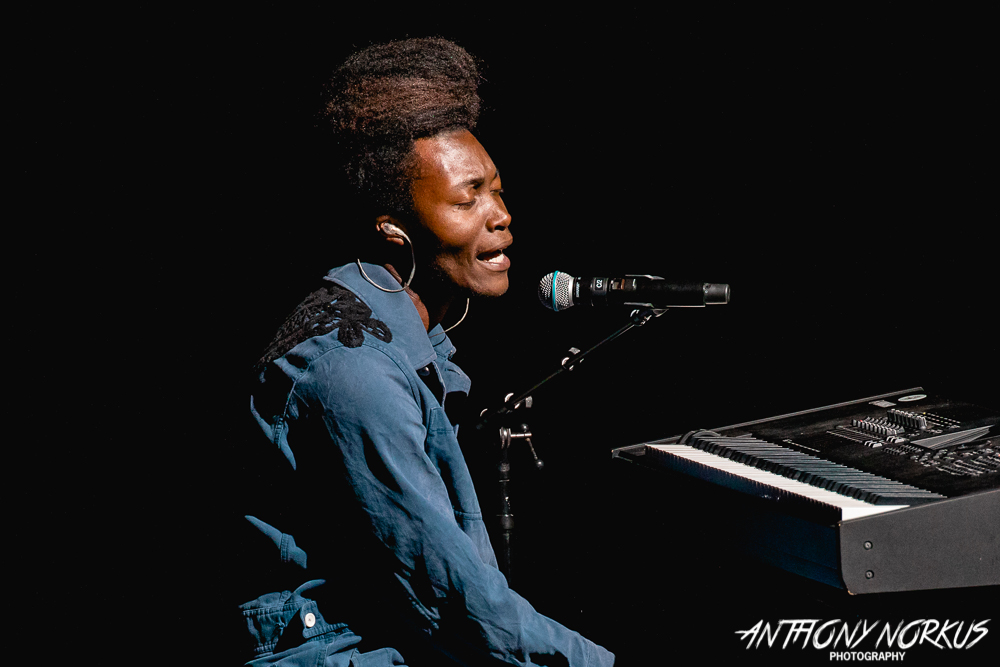
Show Opener: Benjamin Clementine. (Photo/Anthony Norkus)
I’ve watched bands I love intensely play unremarkable afternoon sets in withering heat on festival stages awash in corporate branding. I’ve watched exciting young artists die inside a little bit during South By Southwest showcases in front of drunk marketing people whose jobs should not exist. I’ve thrown full beers against walls at insane basement shows I was probably too old to be at. I watched my mom cry from the nosebleeds at a Paul McCartney show. I lost my phone at RiotFest while tripping on mushrooms and have never felt more serene.
I fell in love with a stranger while watching Chromeo under an enormous light-up inflatable moon. I wiped rain off my face one night at Lollapalooza while Spoon played “I Summon You” and I pined for a person nearby who had broken my heart, and whose heart years later I would break in turn. I watched Trent Reznor end a Nine Inch Nails show by pushing over his synth during “Hurt” after getting hit in the face with an airborne Zippo, an incident I reported on for the local paper in exchange for my first Wikipedia citation(!). I saw Daft Punk inside the pyramid. My sensory organs melted after seeing Bjork with a brass ensemble of Icelandic women. Beyonce slayed me from the other side of a football arena.
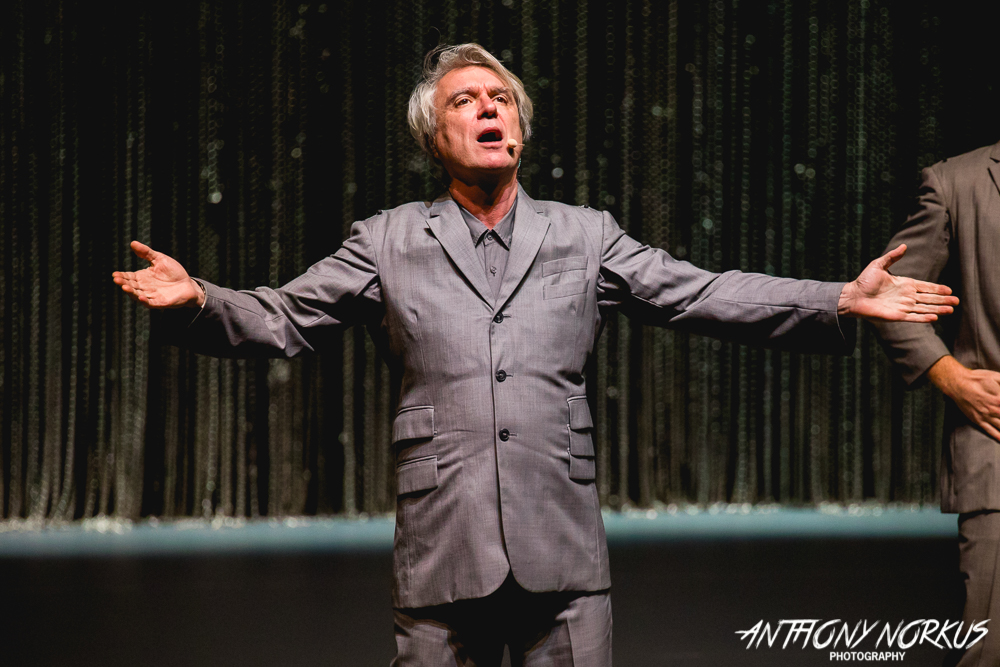
A Concert of a Lifetime: Byrne’s ‘American Utopia’ tour. (Photo/Anthony Norkus)
I watched, agog, as Sigur Ros brought its full-blast Sigur Rosity to a small auditorium at Calvin College and nearly peeled my skin off. I watched the Swedish doom-metal band Ghost play an acoustic show in full makeup and ceremonial dress in the middle of the day. I watched a saxophone player emerge from fog to play the solo in “Midnight City” when M83 was touring behind “Hurry Up, We’re Dreaming,” then disappear for the rest of the show, meaning they paid to bring him on the road for about 40 seconds of work per day, which was worth every cent. I’ve seen Wayne Coyne inside his giant hamster ball nearly as many times as I’ve shaved.
I love the passing of time, and it’s an absurd privilege to mark it with memories of these shows and the countless others that will occur to me after I hit send. But the tradeoff is that the concert-going experience itself has long since been drained of its ethereal magic. You understand, for instance, that the mind-blowing light show is just a guy sliding faders up and down in time with the music while idly scrolling through his phone.
But Byrne on Wednesday was indeed special, a use of a well-established context to do and say something unforgettable, confirmed anecdotally by the number of die-hard music people I encountered afterward, people who have seen hundreds more shows than even I have, staggering into the night convinced this was one for the deathbed highlight reel. You know they’re right.
And you may find yourself grinning uncontrollably.
PHOTO GALLERY: David Byrne, Benjamin Clementine at DeVos Performance Hall
Photos by Anthony Norkus

Copyright 2018, Spins on Music LLC